
Governor Hochul announces agreement on FY2027 State Budget
 Major Investments, Including Comprehensive Path to Universal Child Care, Will Make New York More Affordable for Families
Tackles Energy Costs With Sweeping Affordability Package, Including $1 Billion Energy Rebate To Provide Utility Relief to New Yorkers and New Ratepayer Protection Program To Guard Against Rate Increases and Spiraling Costs
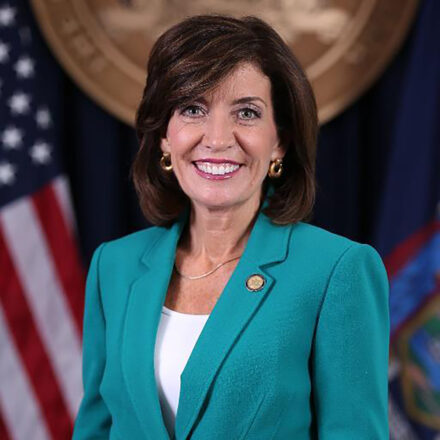
Albany, May 7, 2026 – Governor Kathy Hochul today announced an agreement has been reached with legislative leaders on key priorities in the Fiscal Year 2027 New York State Budget.
“I promised a Budget that works for working people and expands opportunities for all New Yorkers and I was not going to back down from that fight,” Governor Hochul said. “Alongside my partners in the Legislature, today we are delivering on that promise. This Budget includes sweeping changes to lower costs, enhance public safety, protect our communities from federal overreach and invest in the future of New York families.”
Providing Universal Child Care
In this State Budget, Governor Hochul is putting New York State on a concrete path to universal, affordable child care, beginning with committing to investments that will support the delivery of affordable child care to up to 100,000 additional children.
The Governor’s landmark investment will increase funding by $1.7 billion bringing the total FY27 investment to $4.5 billion for child care and pre-kindergarten services statewide.
These investments will:
- Make Pre-K truly universal statewide with funding to make high-quality Pre-K seats available for all four-year-olds in New York by the start of the 2028-29 school year and increasing State grants to existing programs to ensure high-quality care.
- Partner with New York City to launch the new 2-Care program and finally realize the promise of universal 3K access in New York City.
- Enhance the Child and Dependent Care Tax Credit to help defray childcare expenses for 230,000 New York families by providing an average benefit of $576.
- Support the development of New York’s ‘First 3’ program, which will partner with counties to offer high-quality, affordable child care to children 0-3 regardless of income.
- Make historic investments in the Child Care Assistance Program, delivering high-quality, affordable child care to tens of thousands of additional young New Yorkers that is capped at $15 a week for most families.
- Support the child care workforce through early childhood educator preparation.
Alongside these commitments, the Governor will launch an Office of Child Care and Early Education to steer the implementation of high-quality, universal child care for New York families, and will work to enhance awareness of the Empire State Child Credit to ensure as many families as possible benefit from the Governor’s historic expansion of New York’s child tax credit, which increased the credit from $330 per child to $1,000 per child for children under four and $500 per child for children ages four through 16.
Lowering Auto Insurance Rates for Everyday New Yorkers
New Yorkers pay some of the highest car insurance rates in the nation, totaling just over $4,000 annually on average — nearly $1,500 above the national average. Car insurance rates are driven up by a combination of fraud, litigation, legal loopholes, and enforcement gaps, with staged crashes and associated insurance fraud inflating everyone’s premiums by as much as $300 per year on average according to some estimates.
The final Budget will put money back in New Yorkers pockets via a series of common-sense legislative reforms that will ensure bad actors and fraudsters cannot exploit the system and will hold insurers accountable to ensure that their savings are passed on to consumers.
The final State Budget will:
- Cap payouts for drivers engaging in criminal behavior at the time of the incident, including uninsured motorists, drunk drivers, and drivers in the act of committing a felony.
- Better define what actually constitutes a ‘serious injury’ so that damages for pain and suffering or emotional distress are reserved for those able to objectively demonstrate that they have suffered a serious injury.
- Ensure that if a driver is found to be mostly at fault for causing an accident, they cannot claim outsized payments for damages.
- Prevent insurance companies from exorbitantly raising rates by setting a legal threshold that prevents excess profits and returns savings to consumers.
- Create new regulatory safeguards to prevent insurance companies from raising rates without seeking express approval from the Department of Financial Services.
- Protect consumers by prohibiting insurance companies from setting rates based on extraneous, personal factors like homeownership status, occupation, education level or zip code.
- These measures come in addition to the Governor’s whole-of-government approach to combatting fraud by tasking DFS, DMV, DCJS and NYSP with a more proactive and coordinated approach to enforcement.
Tackling Utility Costs
New Yorkers deserve reliable energy at a price they can afford, which is why the final State Budget includes a comprehensive energy affordability package designed to put money back into New Yorkers’ pockets and protect against future drivers of rate increases.
The final State Budget will include a one-time, $1 billion energy rebate to provide relief to New Yorkers dealing with rising energy costs.
The Budget also includes a Ratepayer Protection Plan comprised of a sweeping set of reforms to modernize the Public Service Law, demand strict fiscal discipline from utilities and empower the State to fight more effectively for lower bills. The Budget will:
- Tie executive pay directly to customer affordability.
- Require utilities to present a Budget constrained option that keeps their operating and capital costs below the rate of inflation when requesting a rate increase to ensure efficiency and affordability are prioritized.
- Ensure customers do not foot the bill for hidden costs like lobbying, political contributions and unnecessary executive travel.
The final State Budget also includes measures to:
- Invest millions more into the EmPower+ program, which has helped nearly 42,000 low- and moderate-income households across the state finance energy improvements, saving families about $600 per year on their utility bills.
- Modernize the way utility rate cases are reviewed to help keep prices manageable.
- Incentivize the use of smart technology to help reduce energy usage and bills.
This is in addition to other work the Governor has announced to drive down energy rates for consumers, such as her proposal to ensure large data centers pay their fair share for energy.
In addition, the final State Budget will enact common-sense changes to the Climate Leadership and Community Protection Act that continues the state’s nation-leading commitment to clean energy and climate goals while at the same time prioritizing affordability.
Comprehensive Immigration Protections
Amid an unprecedented escalation in aggressive federal immigration enforcement by ICE, the final State Budget will include a comprehensive plan that will expand protections for New Yorkers, safeguard basic rights, and hold federal immigration officials accountable. The plan will:
- Prohibit local law enforcement from being deputized by ICE for federal civil immigration enforcement by eliminating 287(g) agreements, barring state and local police from acting as civil immigration agents, or using taxpayer-funded resources or personnel to carry out federal civil immigration enforcement and detention.
- Establish a state right to sue federal, state, and local officials, including ICE officers, for constitutional violations.
- Deny ICE permission from entering sensitive locations – including schools, libraries, health care facilities, polling locations, and homes – without a judicial warrant.
- Ban federal, state, and local law enforcement from wearing masks while on duty.
- Strictly prohibit the use of state, local or school civil resources—including employee time—for civil immigration enforcement activities.
- Ensure all students can access education without fear of ICE interference, codifying the right to a free public education regardless of immigration status.
Posted: May 7th, 2026 under Peru/Regional History, State Government News, State Legislator News, Statewide News.