Military Biographies of North Country Honor Flight #68 Veterans (May 16, 2026)
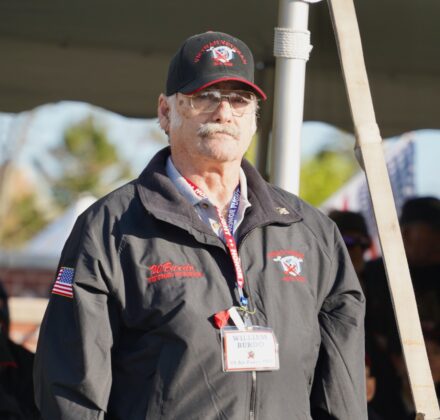 William Burdo – US Air Force 1973-1993 Vietnam
William would enlist in the Air Force because it offered the career field in construction that he wanted. He would receive nearly 1 ½ years of training at McChord AFB as a structural technician. He would remain at McChord doing building removal and construction until he was shipped to Osan Air Base in Korea, then transferred to California. Here William would undergo back surgery. Healed, he would return to the Osan base in Korea assigned the Red Horse Civil Engineering squadron for a year.
Over his 20 years of service, TDY assignments would allow him to travel to multiple locations. William would end his career back in California at McClellan AFB, serving his final 5 years.
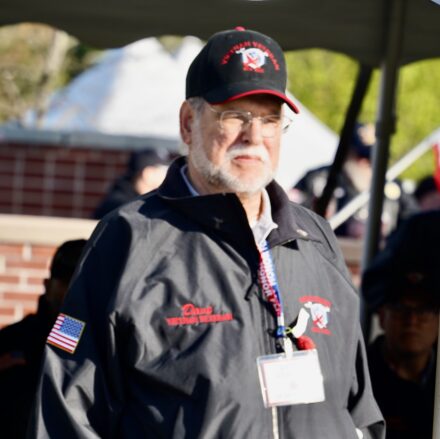 David Colver – US Army 1970-1972 Vietnam
David would be drafted into the Army, and train as a wheel vehicle mechanic, followed by an additional 6-week training as a rough terrain mechanic. In Vietnam, David worked in the 984th Land Clearing Company for 9 months using Rome Plow, a type of large, specially modified armored bulldozer, and D-9 equipment. He would then be reassigned to Fort Carson. Here he would pick constantan wire in the field until he was discharged.
He enjoyed weekend duty assignments in the carpool, which had a portable TV and radio. Despite being drafted, David appreciates the training that provided him with a living after the military and instilled a good work ethic. He recalls Vietnam as a beautiful country, best seen in peacetime. Like many young men, he didn’t fully understand the mission at the time.
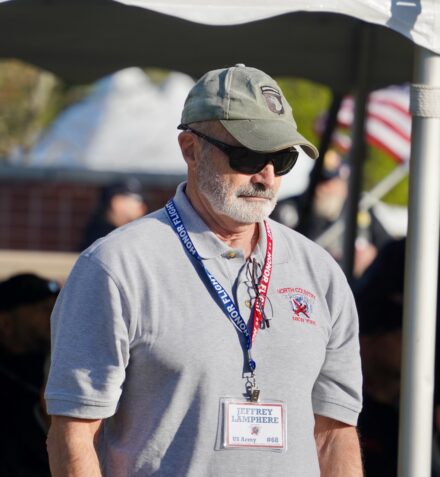 Jeffrey Lamphere – US Army 1968-1969 Vietnam
Jeff would serve in the Army, same as his father before him. Drafted, Jeff would follow orders and keep his nose down during basic. At Fort Belvoir, he would receive advanced training as a Powerman, followed by jungle training. Reporting to Oakland Army Base, after 30 days of leave, Jeff would be shipped to Bien Hoa Air Base in Vietnam. He would spend a week here until joining Army Camp Eagle’s 101 Airborne Division, where he would be assigned to maintain power sigma to remote fire bases. He would serve in Vietnam for 13 months.
Jeff would earn the Bronze Star, the Vietnam Campaign Medal, the Vietnam Service Medal, and Army Commendation Medal, as well as other commendations while serving his country. Today, Jeff is accompanied by his nephew Bryan, who is an Air Force veteran.
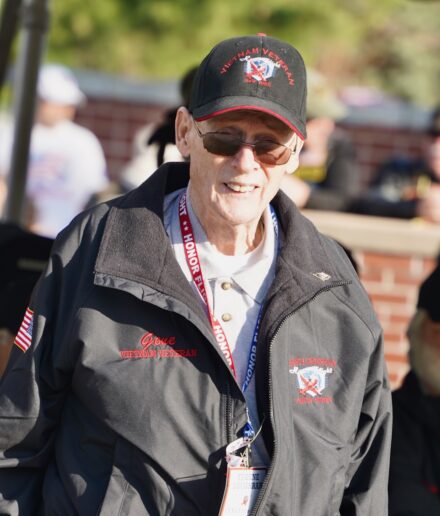 Eugene Loughran – US Air Force 1964-1968 Vietnam
Eugene would complete specialized training as a jet engine mechanic in four months at Amarillo AFB. Assigned to Del Rio AFB, he would earn three awards for his improvements to jet engines, each award was accompanied by a cash reward. While there he enjoyed fishing. He would give his catch to the locals that appreciated the food.
Eugene would call his long-time next-door neighbor and girlfriend, asking her “how about we get married?” She informed him that he didn’t earn enough money. However, he managed to persuade her to fly down to Texas, and they got married at the base chapel. Coming to the end of his enlistment, Eugene would have liked to reenlist, but his wife was ready to return home. He would continue for 8 years in the Saranac Lake Reserves, and another 8 years in the Vermont Guard serving both as a medic and performing engine inspections. He used his medical training as a civilian EMT to deliver three babies during his career.
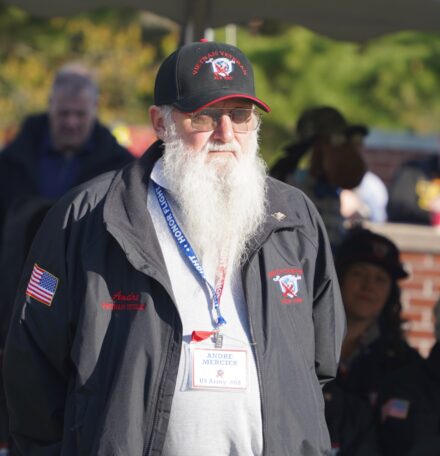 Andre Mercier – US Army 1970-1971 Vietnam
André would be drafted into the Army and complete 9 weeks of advanced infantry at Fort Ord, in California, before being sent to Vietnam for 366 days.He would leave for Củ Chi Base Camp in Vietnam from Seattle on his birthday. Assigned to the 25th Infantry Division, 2nd Battalion Mechanized Triple Deuce, André would be placed into an active land combat zone. Receiving an assignment with the 2nd of the 17th attached to 101st Airborne, André would assume the role of helicopter point man, the first to enter and exit for rescue and recovery operations. During a month-long deployment in Khe Sanh, they would locate a buried Marine ordnance. At A Shau Valley, the warrant officers did not want to come in due to monsoon conditions, as the infantry based there were being shelled with CS gas.
André would receive the Purple Heart when his vehicle ran over a landmine, and the Bronze Star, along with other distinguished service medals for his service. It was important to André that he went to Vietnam so that others wouldn’t have to.
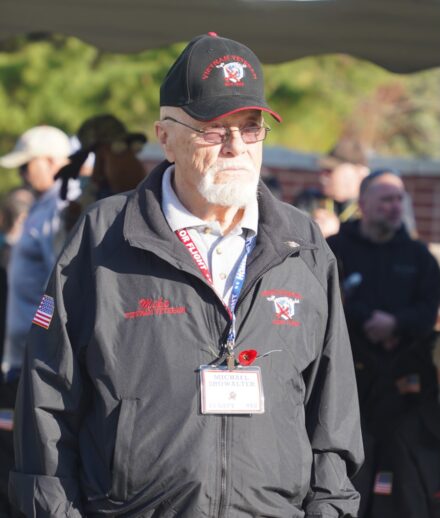 Michael Showalter – US Navy 1965-1969 Vietnam
In basic, Michael would feel his first shared spirit, pride, and loyalty among a group, as well as how to shave correctly. He would go on to feel a sense of accomplishment in his training in Aviation Electronics as he was challenged by being both dyslexic and left-handed. Sent to Quonset Point flight line he fixed planes’ navigation radios and equipment. Transferred to Beeville, Texas, he joined the Chase Field Naval Air Station’s VT-25 Training Squad, working with pilots on takeoffs and landings. Next, he joined the VX-6 Air Development at McMurdo Station in Antarctica, providing support for exploring scientists, earning the Antarctica service medal. They found relief during liberty at Christ Church, where the pastor ran a still.
Michael would receive a surprise over the radio from his wife that the “rabbit had died.” He is honored to have served with a great group of servicemen, all dedicated to their duty to the country.
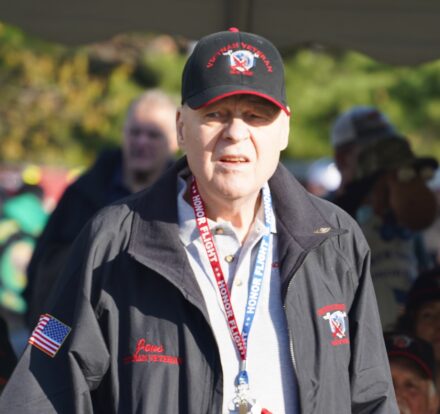 Jens Sorensen – US Navy 1963-1967 Vietnam
Jens would enter the Navy following in the footsteps of his grandfather and father. In San Diego, he would complete his advanced training in Machinery Repair at the top of his class. Assigned to the USS Tutuila, Jens remembers the not-so-welcoming signs in Norfolk for “All dogs and sailors keep off the grass.” He would participate in Operation Springboard, a crucial Navy training exercise with NATO members. Directed to Vietnam, Jens would find himself in the Gulf of Thailand and on the ground at the border of Cambodia. He would be placed on a swift boat for coastal patrol of Cambodia and would be assigned to Cat Lo Naval Base, a crucial strategically located site at the northern shore in South Vietnam.
Jens’s five brothers also served. He’s proud of his service, the opportunity to travel, and is grateful that he was warmly welcomed home by his community.
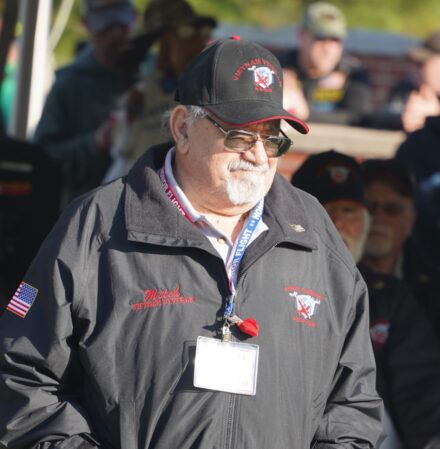 Mitchell Terry – US Army 1970-73 Vietnam
After high school, Mitch enlisted in the Army. He completed basic and advanced infantry training at Fort Dix and then proceeded to Fort Rucker to undergo training as a Food Service Specialist. While stationed at Fort Jackson, Mitch received orders for Vietnam. However, the orders unexpectedly changed to Mannheim, Germany’s 126th, 69th Transportation Company. At the Turley Barracks, he worked in the mess hall and performed record keeping tasks. These barracks had once been a German military complex with subterranean levels that Mitch never got to explore.
After over two years in Germany, Mitch was discharged early. He was happy to have traveled, and to have been present for the Munich Olympics.
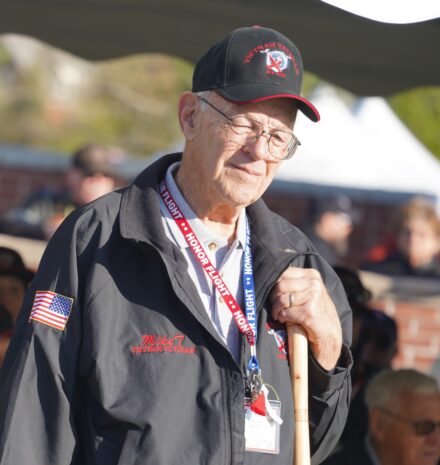 Michael Thompson – US Navy 1961-1965 Vietnam
Michael would receive training for flight aviation electronics and anti-submarine warfare electronics. Never aboard ship, he would log 1600 hours of flight time flying patrol planes for anti-submarine warfare surveillance. His first assignment would be to VP-30 in Jacksonville, Florida. Here he would fly patrol in the P5M Marlin and the P2V Neptune. He would then be moved to the VP-23 Seahawks in Brunswick, Maine. As a 1st Tech at VP-23, he would move up to squadron commander. Michael traveled extensively and would fly above the Arctic Circle earning him a “blue nose” designation. He would celebrate with the Norwegian military after locating a Russian Foxtrot Submarine. While in Sicily as his duty station, he would attend church. He still recalls the young priest’s words: “The only decision you have to make is whether you love Jesus or you don’t.”
He would meet and marry his wife, Carol, while stationed in Maine. They will celebrate their 60th anniversary in June.
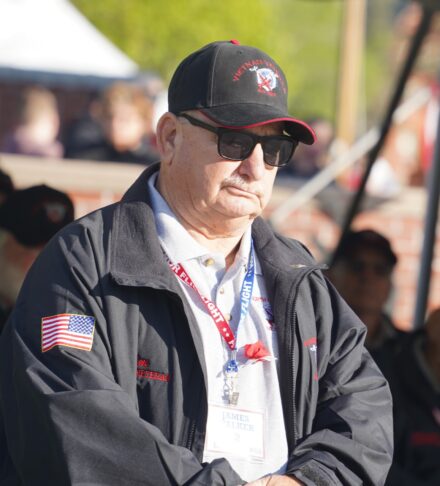 James Walker – US Army 1967-1970 Vietnam
James’ enlistment in the Army would take him to Fort Belvoir for 8 weeks of heavy equipment training. He would receive his first assignment to Fort Knox, where he would work as a tank mechanic for 1 1/2 years, as they had no heavy equipment at this location. He would be assigned to Artillery Fire Base upon arriving in Pleiku, Vietnam. He would spend a year in country as an artilleryman and working in maintenance. His service would earn him the Vietnam Campaign Medal, the Vietnam Service Meal with 2 overseas service bars, and the M-14 Sharpshooter Badge.
James takes great pride in having served his country. He would grow up quickly from these experiences.
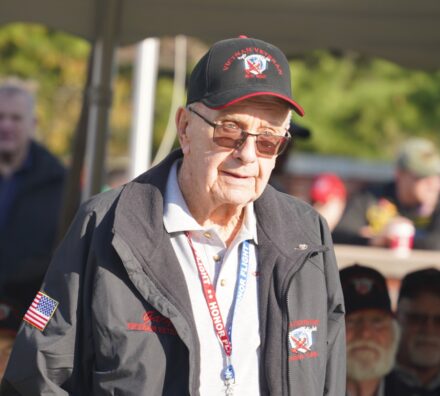 Gary Wells – US Navy 1963-1967 Vietnam
Even though he couldn’t swim, Gary considered being aboard ship a better option for enlistment. His first placement would have him assigned to the brig, picking up and delivering prisoners. On a flight transfer, none of the prisoners would be handcuffed; they would have 3-clips of ammunition and only one guard qualified with a 45. Assigned to the aircraft carrier, USS Midway, off the coast of Vietnam, they would return to San Diego for ship rehab during a typhoon with waves over 100 ft. After repairs, they would return to Vietnam; from their offshore location, they could see bombs drop.
While aboard ship, Gary would find the flight deck the most dangerous. He would save a man from falling off the catwalk. There would be no talk of reenlistment, as his wife told him he would be divorced if he didn’t come home.
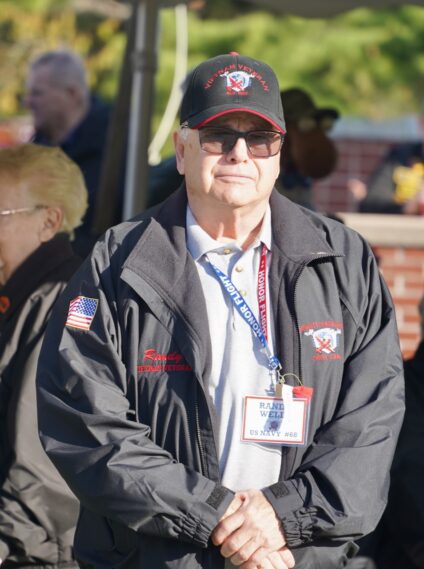 Randy Wells – US Navy 1974-1978 Vietnam
Randy, like his brother Gary, enlisted in the Navy. Sickness and a 2-day hospital stay at the end of basic would challenge Randy’s obstacle course completion, but fellow sailors would help him through. Assigned to the USS Vancouver, Randy reported to find the ship was not docked in San Francisco. It would take him five days to finally board the ship off the shore of Vietnam. His dress whites that had turned quite brown. He would be considered AWOL if not for having all his location orders stamped. He would be aboard the USS Vancouver during the Fall of Saigon, assisting thousands of evacuees in their journey to safety. He would go on to attend A School for lithography and serve aboard the USS Tripoli in the Western Pacific. His final time would be spent at the Pentagon.
Despite facing numerous early challenges, Randy would emerge with numerous commendations and decorations for his service.
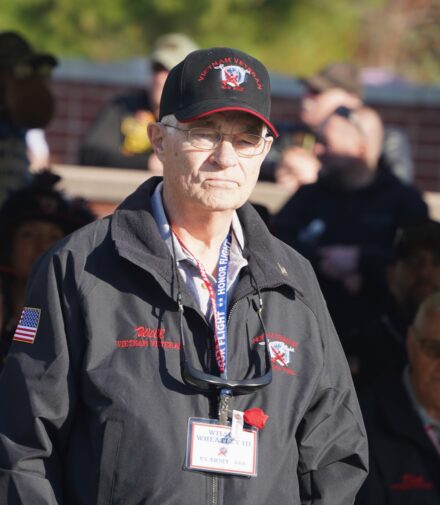 Wilson Wheatley III – US Army 1970-1972 Vietnam
As a member of ROTC at the University of Vermont, Will would begin his enlistment at Infantry Officer Basic training at Fort Benning. He would then be assigned to the 101st Airborne Division at Fort Campbell where he served as a training officer. His role was to prepare recruits for combat. In preparation for Will’s orders to Vietnam, he completed jungle operations training at Fort Sherman in the Panama Canal Zone. Upon completion, he joined the 101st Airborne Division, 2nd Platoon, Charlie Company at the Phu Bai Combat Base for search and destroy missions. After a leave, Will returned to Vietnam and served as an Assistant Intel Officer. He participated as an observer in hunter-killer missions involving Loach and Cobra helicopters. Monsoon season, mosquitoes, leeches, and sleeping on the ground were all part of Will’s time in Vietnam.
The Bronze Star Medal and the Combat Infantryman Badge were just some of the distinguished service medals he would be awarded. As he reflects on his service, Will is proud to have served his country as a combat infantry platoon leader.
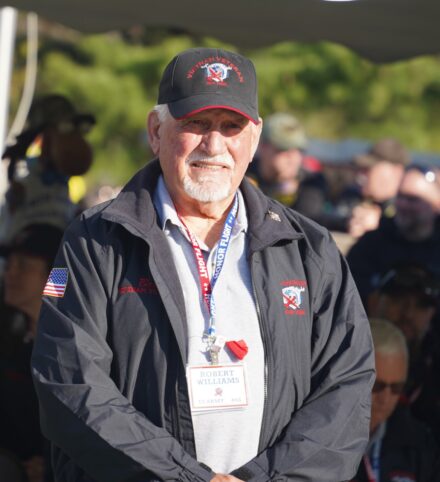 Robert Williams – US Army 1966-1968 Vietnam
Bob was drafted like so many others. He first went to Fort Bragg, but there was no room, so he was sent to Fort Hood. After bouncing between units, he landed in the 2nd Armored Division, where he trained on the 155mm artillery piece. In September 1967, Bob shipped out to Vietnam. He arrived in Saigon with the 1st Field Force, then moved quickly to Da Nang and Dong Ha, joining the 8th of the 4th Artillery attached to the 26th Marines at the DMZ. When he and two other arrived, they were told: one of you will handle artillery, the others drive trucks. Bob had never driven a truck—but he was soon transporting 6,000 pounds of gunpowder through hostile territory.
It was dangerous work. Once, under incoming fire, he jumped from his truck and took cover in a ditch—for six hours. Bob drove all over northern Vietnam. He reflects on it simply: “I made it home,” and “I made a lot of good friends.”
Posted: May 17th, 2026 under Adirondack Region News, Community Events, General News, Honor Flights, National History, National News, Northern NY News, Veterans' News.