Chris Mullen Photo
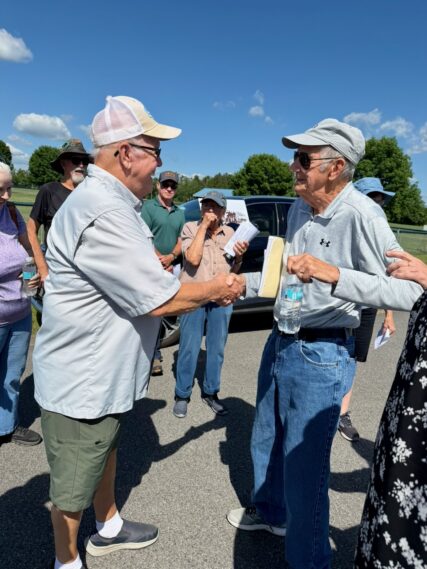
L-R Lowell Way and Bob McGee
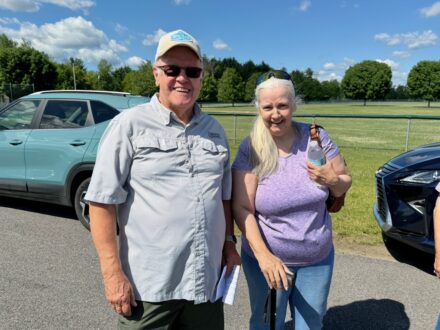
Lowell Way with his sister Marilyn Way Murphy
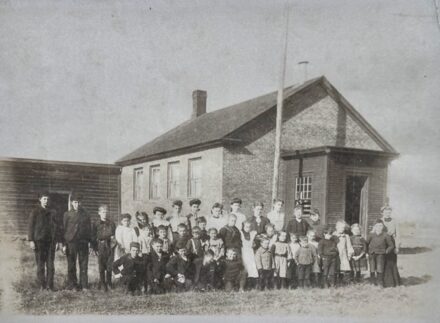
One-room school located adjacent to the Rec. Field on today’s Dashnaw Rd. In the 1800s it was called the Telegraph Rd. The students from several one-room schools gathered for this photo.
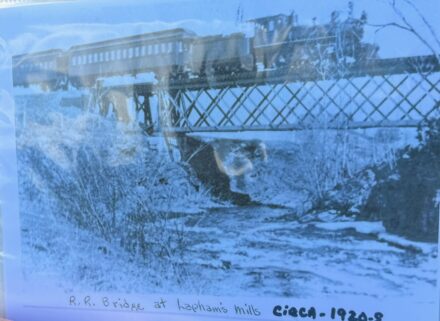
Train Trestle over the Little Ausable River close to the Lapham Mills Rd.
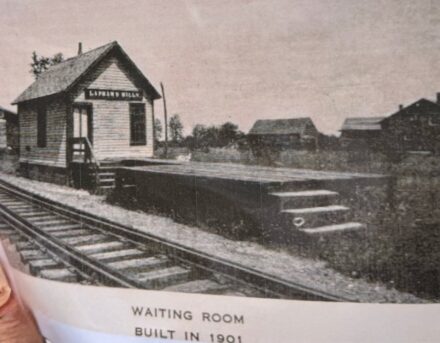
D&H Railroad Waiting Room
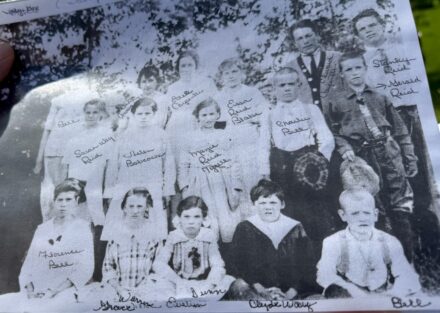
One-room school students
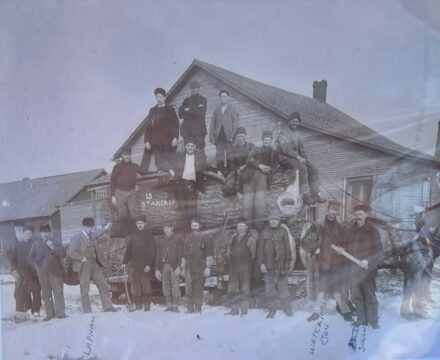
Mill workers
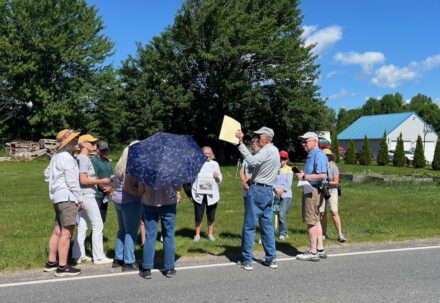
 Peru, NY. – Did you know that between Lapham Mills Recreation Field and the Little Pizza Shop, a one-room school, grist mills, and more industries once flourished ? Bob McGee (Peru High School Class of 58) brought the Lapham Mills Road history alive on Saturday, June 13, during a Peru History Walk hosted by the Town Historian’s office. McGee knows the Lapham Mills Road well because his family home was across the road from the Recreation Field. Lowell Way and his sister Marilyn Way Murphy also lived nearby and attended the history walk.
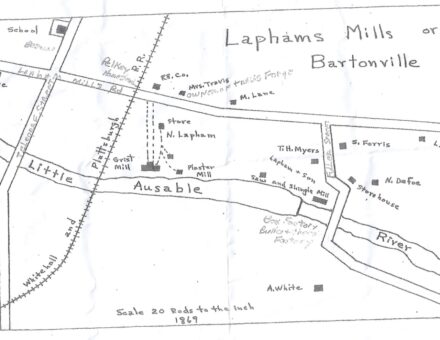
Beginning at that parking lot and walking east along Lapham Mills Road, Bob McGee pointed out where a one-room school, a grist mill, a plaster mill, a grocery store, a saw mill, a shingle mill, a butter factory, and a box factory operated between about 1840 and 1900. Water from the Little Ausable River and Arnold Brook powered the factories.A Delaware and Hudson Railroad (D&H) spur passed through the area. The spur enabled steam-powered trains to pick up passengers and the locally produced goods. The trains traveled to and from the J&J Rogers mills in Ausable Forks.
McGee said a man named Travis Forge started the first mill and a man named Barton started the second mill. Over time, the area became known as Bartonville. Later, a man named Lapham built larger mills, so over time the area became known as Lapham Mills. Many of the factory workers lived along the Lapham Mills Road. Several small grocery stores, usually sharing space with the owners’ homes, served their food needs.
McGee said a man named Forge started the first mill and a man named Barton started the second mill. Over time, the area became known as Bartonville. Later, a man named Lapham built larger mills, so over time the area became known as Lapham Mills. Many of the factory workers lived along the Lapham Mills Road. Several small grocery stores, usually sharing space with the owners’ homes, served their food needs.