North County Honor Flight #70 of June 20, 2026
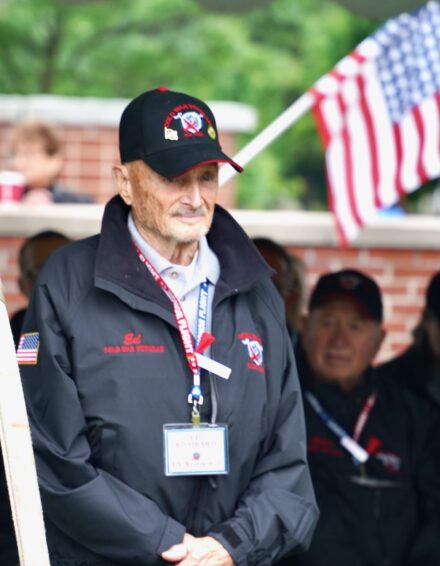 C. Edward Bombard Jr., US Army, 1960-63, Cold War
After basic and clerk-typist training at Fort Dix, Ed trained at Fort Eustis, Virginia, as a Transportation Movement Specialist, coordinating the movement of military vehicles. He was later deployed to North Africa with the 3rd Army, serving in a small unit that oversaw port operations for the Libyan government. Although the unit included ten officers, Ed recalls that the enlisted men handled most of the day-to-day work.
At just 20 years old, Ed earned a rapid promotion to E-5 after stepping in as chief of operations during another soldier’s medical leave. During his 25 months of service, he valued both the responsibility and the opportunity to travel aboard C-130 flights to France, Germany, and England.
Looking back, Ed says he would enlist again without hesitation, calling military service a rewarding experience that taught him responsibility and maturity at a young age.
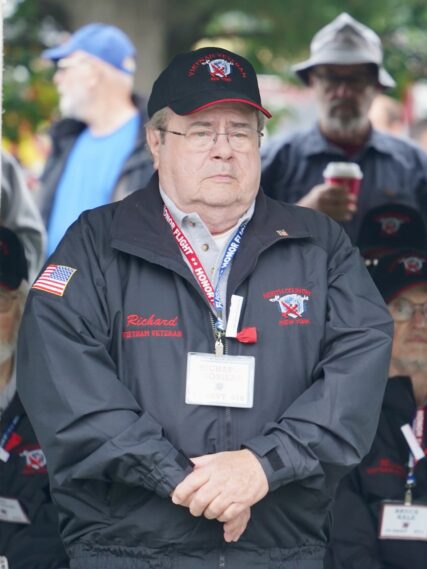 Richard Brosseau, US Navy, 1966-1970, Vietnam
Richard joined the U.S. Navy through the delayed enlistment program while working construction in Vermont. Service ran in his family—his father served in World War II, and his brother was also in the Navy.
He trained in Pensacola, Florida, where he became a plane captain, responsible for inspecting propeller aircraft and ensuring they were ready for flight. Later, in Oceana at Virginia Beach, he worked on F-4 Phantom jets, maintaining those same high standards.
Richard spent three months aboard the USS Independence, including a stop in London, where he took part in performances held for the Queen. He later completed a nine-month European cruise, spending 40 days at sea before sighting land.
During carrier war games, lights went dark as opposing aircraft searched for them—if found, 100-pound bags of flour hitting the deck meant they’d been “hit.” Richard valued his Navy service and the opportunity to see the world.
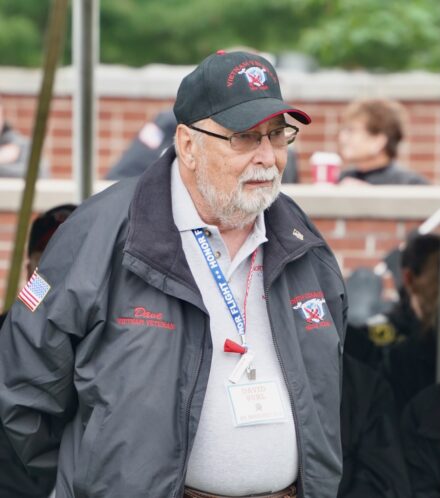 David Burl, US Marines, 1967-1972, Vietnam
After completing infantry training at Parris Island and Camp Lejeune, David trained in Texas as a reciprocating aircraft mechanic and later in California as a crew chief, responsible for his own CH-34 helicopter and crew. “It was my aircraft,” he recalls. Following air survival training in Okinawa, he deployed to Vietnam, arriving briefly in Da Nang before serving in Dong Ha along the Cua Viet River in Quang Tri Province and aboard the USS Princeton.
As part of the “Ugly Angels,” David flew resupply and recovery missions, including operations into Hue during the siege. He found the work deeply meaningful, often helping evacuate wounded soldiers from combat zones. In 1967, while serving with Marine Helicopter Squadron 364, he received the Air Medal for heroism. He still reflects on “The Man in the Door,” a poem written by a fellow crew chief that captured the intensity of those missions.
After returning home, David reenlisted. “I’d do it all again in a heartbeat,” he says. “I just did my job.” Yet the impact of that service remains with him every day still.
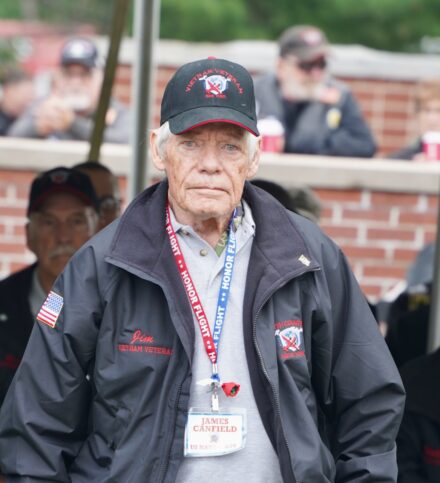 James Canfield, US Navy, 1970-1972, Vietnam
After earning an English degree from the University of Michigan and a medical degree from the University of Pittsburgh, Jim completed pediatric training at UVM before entering military service. He trained as a Navy officer in Coronado, California, preparing for deployment to Vietnam.
Jim served as a medical officer aboard the USS Benewah with a river patrol unit, working alongside five Navy corpsmen to treat wounded soldiers under intense conditions. Constantly moving—often staying in one location less than a day—the team triaged patients, stabilized the wounded for evacuation, or treated them on board before returning them to duty.
The experience left a lasting impact, and Jim continues to manage PTSD, something he notes was common among medical personnel in Vietnam. After returning home, he completed his pediatrics residency and spent 21 years specializing in neonatal intensive care. Reflecting on his service, Jim says he would serve again—with thoughtful deliberation.
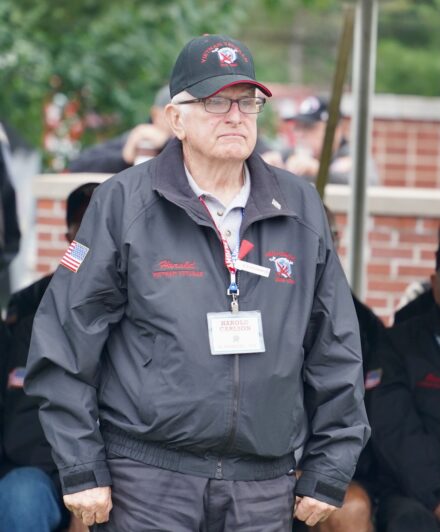 Harold Carlson, US Marines, 1963-1966, Vietnam
Harold and his lifelong friend, fellow Marine Alan Lacy, have shared similar paths since they were five years old and classmates in Westport. At 17, Harold left high school, traveled to Plattsburgh, and enlisted in the United States Marine Corps.
After Parris Island and advanced infantry training at Camp Geiger, he was assigned to Camp Lejeune, North Carolina. His early service included three months aboard the USS Chilton in the Caribbean, followed by a six-month Mediterranean deployment.
Harold was later sent to Vietnam, where he spent 13 months with the 3rd Marine Division beginning on Mountain 225. He often says he was fortunate to be reassigned to the heavy 81 mortar unit at headquarters after other mortar Marines were moved into frontline combat units carrying lighter weapons. The reassignment kept him off the front lines.
From Da Nang, Harold traveled to Okinawa and eventually home for his discharge. Along the way, he earned his GED, and later Westport Central School awarded him his high school diploma — an achievement he remains deeply proud of.
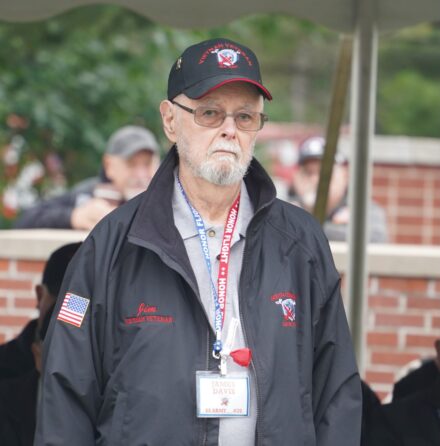 James Davis, US Army, 1964-1966, Vietnam
Jim was drafted into the US Army. His uncles served in WWII in the US Army and US Navy. Jim was a radio relay carrier operator responsible for setting up, operating, and maintaining multichannel tactical communications. He set up 196 channels of teletype to distribute messages.
Jim’s first assignment was in Fort Monmouth, NJ and from there he went to Virginia and then overseas. When he had 100 days left, he was one of 2,500 soldiers shipped to Vietnam by a boat that was 350′ long, stacked 4 high like a pack of sardines. Jim spent 70 days in Vietnam. Before he left Vietnam, his replacement was killed in country in an accidental shooting.
Jim would serve his country again and still has his Vietnam service medal and good conduct medal. He said he “just didn’t get caught.”
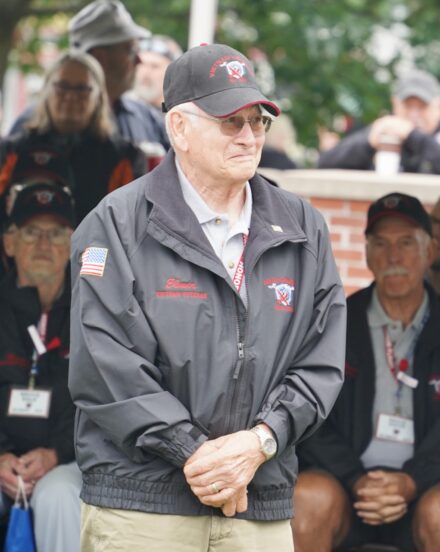 Elmer Durant, US Coast Guard, 1965-1971, Vietnam
Elmer initially tried to join the Marines, but with no recruiter available he enlisted in the Coast Guard through the buddy system, following his father’s service in the Coast Guard during World War II.
He served as a seaman maintaining Aids to Navigation systems, performing damage control and firefighting, small boat operations, and attended ammunition and weapons school at Parris Island, South Carolina.
He was assigned to USCGC Woodrush, a storied 180-foot seagoing Iris-class buoy tender in the U.S. Coast Guard, known for icebreaking and search and rescue missions.
Elmer’s brother Gary was drafted into U.S. Army while Elmer served in Vietnam; Elmer refused to sign paperwork allowing him to deploy there, and Gary was instead sent to Korea.
He received two Bronze Stars and Coast Guard Commendation Medal for saving lives during fire caused when soybean barge and jet fuel barge collided.
He becomes emotional reflecting that the most meaningful outcome of his service is that he and his brother both survived and made it home together alive safely.
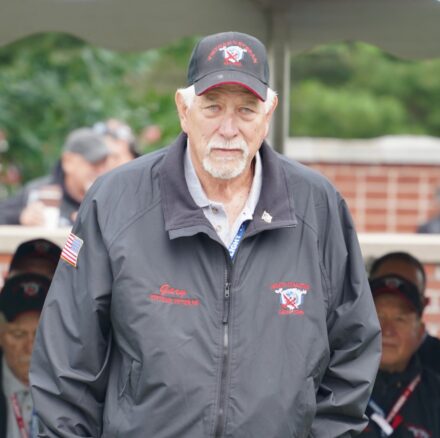 Gary Durant, US Army, 1967-1969, Vietnam
Gary was one of seven men from Malone, New York, drafted into the U.S. Army. At Fort Dix, he qualified as a sharpshooter and expert, then graduated first in his class at Fort Sill, Oklahoma, earning Soldier of the Month. His commander urged him to attend drill sergeant school, but Gary declined—doing so meant a six-year commitment and immediate deployment to Vietnam.
Instead, he served in South Korea with artillery, supervising 35 Korean workers and one U.S. specialist. During that period, hundreds of barrels of Agent Orange and other herbicides were transported there—exposures that would trigger health issues for Gary decades later.
Nearly fifty years after his service, about five years ago—he was stunned to receive the Combat Infantry Badge in the mail, along with a letter acknowledging his contributions.
After discharge, Gary headed straight to Memphis to reunite with his brother, Elmer, who had just two days left in service. The Durant brothers, born one year and twenty-two days apart—now share another honor: flying together on Honor Flight. It’s a tribute to their service, their brotherhood, and the long arc of recognition that finally reached them.
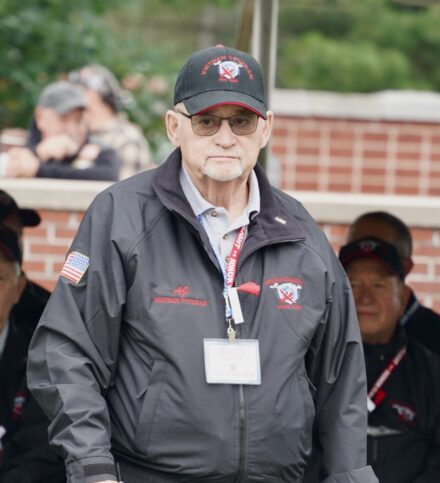 Allen Lacy, US Marines,1963-66, Vietnam
Allen’s lifelong friend, Harold Carlson, convinced him to travel to Plattsburgh to enlist in the Marines. Allen had planned to stay in school and had no interest in military service, but before the trip ended, both young men enlisted. They soon headed to Parris Island, Fort Geiger for infantry training, and Camp Lejeune. Allen also served aboard the USS Chilson during a Mediterranean deployment.
Later, Allen spent six months at Guantanamo Bay providing base security — walking fence lines, standing tower watch, and monitoring Cuban activity. While there, he learned of President Kennedy’s assassination from a Cuban soldier whispering through the fence.
Scheduled for Vietnam after returning to Camp Lejeune, Allen instead remained stateside after a hernia required treatment. He finished his service at the Brooklyn Naval Shipyard brig. Like Harold, he earned his GED in the Marines and later received his diploma from Westport Central School.
Allen says he was glad he served; he learned a lot about life.
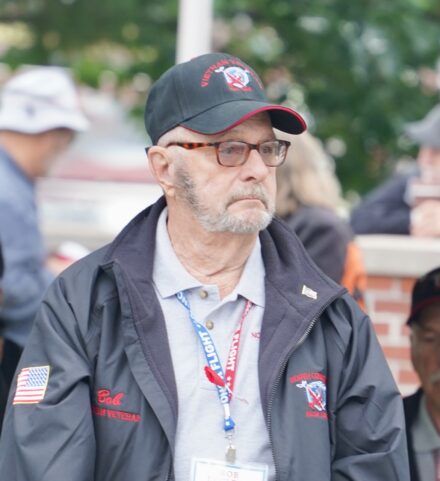 Robert Leclerc, US Army, 1962-1967, Vietnam
At the age of 23, Robert was married and working at General Motors in Massena when he was drafted.
Robert trained as a medic and went to Munich, Germany for 18 months to provide field medical care, administering vaccinations, prescribing medications, removing stitches and other medical needs. He also got to drive and ambulance a lot and deliver blood.
While in Munich, Germany, his wife was there for 15 months, and his daughter was also born there. He didn’t have rank so had to pay for everything. He and his family lived in the home at a German Colony right outside of Germany.
Robert said he was upset at first due to being drafted but after a while, it didn’t bother him. He got his job back at General Motors and said it was a good experience. He got to travel and see a lot and the German people were nice.
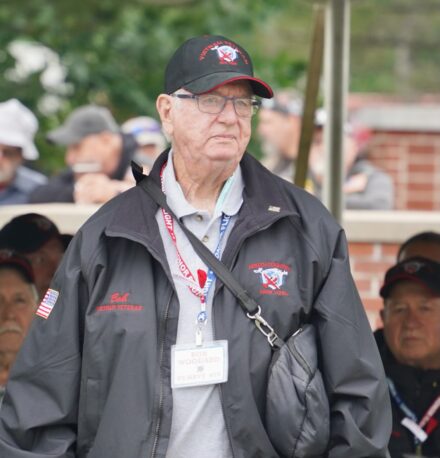 Richard Onufer, US Army, 1970-71, Vietnam
After college, Richard enlisted in the Army and completed basic training at Fort Campbell, Kentucky, followed by mortar training at Fort Polk, Louisiana, preparing for deployment to Vietnam. Once overseas, however, mortar specialists were no longer needed, and he was reassigned as a radio operator.
Richard first served with his company commander before moving to battalion headquarters near the DMZ, where he spent much of his time on patrol under constant pressure from the Viet Cong. Though often close to danger, his role kept him somewhat removed from direct combat. During his service, he was named Soldier of the Month—an achievement he still values today. Despite the intensity, he recalls a brief week of rest and recuperation in Hong King as a welcome break, even though he missed a Bob Hope Show.
After a year in Vietnam, Richard returned to Fort Hood, Texas, and was discharged shortly after. He considers himself fortunate to have avoided front-line fighting, though the constant threat of booby traps and hidden explosives was never far from mind. Looking back, he said it rained a lot in Vietnam and was cold enough to see your breath. He reflects simply: “I’m glad I had the chance to serve. I learned a lot.”
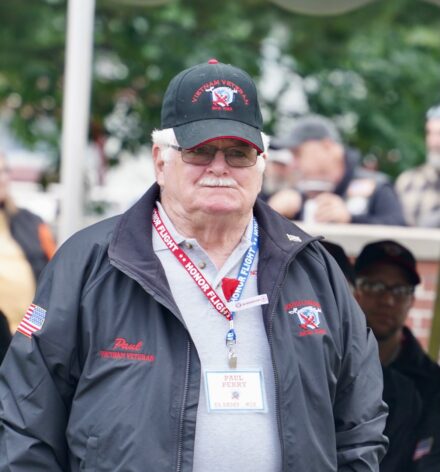 Paul Perry, US Army, 1968-1979, Vietnam
Since Paul was between 10-11 years old, he wanted to go in the service. His father was a retired Lieutenant Colonel in the US Army. Paul enlisted in the US Army and went to Vietnam. While in Vietnam, he received a draft notice to an APO box.
Paul was in the Army Security Agency, spying on the spies. He would listen to their communication and if not appropriate, he would get the proper chain of command.
Uncle Sam wanted Paul to go to Asmara, Ethiopia but he said no and took an early out. He re-enlisted for Ranger School and went back to Vietnam where he changed to Airborne School. He ended up becoming a vessel master, which is being in charge of ships, for the US Army.
Paul had the most fun in Vietnam. One time while going into the Cua Vuet River where two ships were taking too much fire, Paul and his crew and vessel went in and got the Marines off the beach. They weren’t going to leave anyone behind.
Paul remembers quite vividly that he spent 2 years, 8 months and 24 days in country in Vietnam.
Robert Woodard, US Navy, 1960-64, Vietnam
Bob’s Navy career began at Great Lakes, Illinois, followed by Guided Missile Maintenance training at Dam Neck, Virginia. He then traveled to Philadelphia to join his newly commissioned ship, the USS Berkley (DDG-15), before reporting to Newport, Rhode Island.
As a new destroyer, the Berkley embarked on a public relations tour through Puerto Rico, the Panama Canal, Mexico, and California, later demonstrating its capabilities for President Kennedy off Portland, Oregon. The voyage continued to Hawaii and Thailand before becoming active duty near the Gulf of Tonkin during the Vietnam conflict. Bob recalls the journey lasting nearly a year — an unforgettable adventure for an 18-year-old seeing the world for the first time.
The tour later took him to Subic Bay, the Philippines, and Hong Kong before he flew home from Okinawa. Discharged in San Francisco, Bob returned to Vermont. He says he would do it all again; aside from the years spent with his wife, these were the best years of his life.
Correction made at 9:15 a.m. on June 22, 2026 – I did not originally post Robert Leclerc’s photo and name. I apologize for my error. John Ryan
Posted: June 21st, 2026 under Community Events, General News, Honor Flights, Northern NY News, Regional NY-VT News, Upstate New York, Veterans' News.