
DiNapoli releases report on SFY 2025 state budget and financial plan
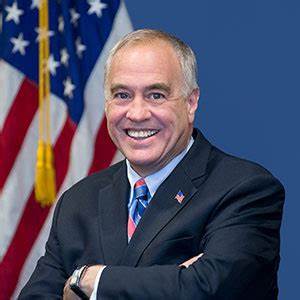 Albany, July 15, 2026 – The estimated $277 billion Enacted Budget for State Fiscal Year (SFY) 2027 is an increase of 7% from SFY 2026 with the state Division of the Budget (DOB) projecting that disbursements will exceed receipts in each year of the Financial Plan, raising questions about long-term fiscal sustainability, according to a report released today by State Comptroller Thomas P. DiNapoli.
The Financial Plan reveals the impact of current pressures on state finances, with DOB projecting that cumulative out-year budget gaps have increased since January and now total $31.8 billion. Despite this growth, no increases were made to the state’s total reserves. In addition, the state is anticipating drawing down on $1.3 billion in General Fund balance by the end of SFY 2027 to help balance the budget.
“The state’s finances remain highly exposed to federal actions and potential economic downturns,” DiNapoli said. “While state spending has increased to fund critical programs, most notably healthcare, education and childcare, total reserves have remained flat, which could put these investments at risk in the future. Major national and international developments risk affecting New York’s economy, with downstream impacts on tax revenues and fiscal stability.”
In recent years, the largest increases in spending have been in Medicaid and School Aid. In SFY 2026, all agency Medicaid spending totaled approximately $39.4 billion (26.5% of State Operating Funds (SOF) spending), whereas spending on School Aid – even after Foundation Aid had been fully funded – was a little over $37 billion (24.9%). DOB’s projections through SFY 2030 show all agency Medicaid spending increasing to $53.3 billion (29% of projected SFY 2030 SOF spending), while School Aid grows to $43.7 billion (representing 23.8% of projected SFY 2030 SOF spending). If projections hold, the combined share of School Aid and all agency Medicaid will have grown from 46.9% of SOF spending in SFY 2019 to 52.8% by SFY 2030.
The state budget responded to three distinct pressures: the retrenchment of federal support for the social safety net; the persistent and stubborn increase in the cost-of-living for New Yorkers; and increasing local government fiscal needs. In the aggregate, the response led to spending increases that include a $5 billion projected increase in state-share Medicaid spending; $1 billion in tax refund checks intended to aid with high utility prices; $944 million more for childcare; and increasing assistance to local governments, particularly for multiple localities facing imminent fiscal cliffs.
Major concerns highlighted in DiNapoli’s report include:
- Federal Funding Risks – The Financial Plan reflects changes to federal funding for healthcare and food security programs resulting from P.L. 119-21, the 2025 federal budget bill. The state took action to preserve healthcare coverage for over a million New Yorkers, but that still resulted in 450,000 New Yorkers losing eligibility. The future of the Essential Plan is uncertain, with details sparse as to whether it will continue beyond SFY 2028. In addition, the Financial Plan identifies increased state spending related to federal changes to the Supplemental Nutritional Assistance Program. Federal funding uncertainty extends beyond these federal law changes, as other actions may further shift the federal-state fiscal dynamic. For example, a recent proposal to make regulatory changes to the oversight, allocation and requirements relating to federal grants would significantly alter the existing framework, potentially allowing for the politicization of federal grants and providing more flexibility for the federal Office of Management and Budget (OMB) or other federal agencies to terminate grants. Adoption of this rule would introduce a significant new structural risk to the state’s finances and upend long-term budget and capital planning, potentially subjecting the state to stranded costs and fiscal hardship.
- Structural Budget Imbalance – Increased spending pressure continues to strain the state’s ability to find structural budget balance and puts into question the state’s future ability to make important investments. State spending is increasing at a time when the federal government is shifting costs onto the state or threatening to pull back, freeze or limit federal support. To prevent budget gaps from growing, new recurring spending should be matched with recurring revenues. Apart from decoupling from recently enacted federal tax provisions related to business expenses, no major recurring revenue changes were included in the budget and the extension of corporate franchise tax rates are scheduled to sunset at the end of 2029.
- Reserves – Over the past several years, the state has significantly increased its reserve levels – both statutory and informal reserves. These record reserve levels are a fiscal achievement that has long been advocated by DiNapoli and for which policymakers deserve credit. However, the Financial Plan indicates that reserves will remain flat – at approximately $15 billion – meaning that their effectiveness is being diluted as the budget grows, potentially limiting the state’s ability to weather fiscal challenges in the years ahead.
- Contract Review and Oversight – The Enacted Budget continues the inclusion of troubling provisions that erode the State Comptroller’s independent oversight of state contracts and expenditures. Changes include increases to various Office of the State Comptroller (OSC) contract and expenditure approval thresholds, notably:
Increases certain discretionary purchasing thresholds to $150,000 for most state agencies, the State University of New York (SUNY), SUNY Construction Fund, and the City University of New York (CUNY).- Increases thresholds for advertising procurements to $150,000 for most state agencies, SUNY, SUNY Construction Fund, CUNY and CUNY Construction Fund.
- Increases certain thresholds for OSC contract approval to $150,000 for the Office of General Services (OGS), OGS customer agencies serviced by the Business Services Center, CUNY and the CUNY Construction Fund.
- Exempts approximately $1.5 billion from OSC oversight and a competitive bidding process. An additional $3 billion can be disbursed without competitive bidding.
Posted: July 15th, 2026 under General News, Northern NY News, State Government News, State Legislator News, Statewide News.