Military Biographies of North Country Honor Flight #72 Veterans (September 5, 2026)
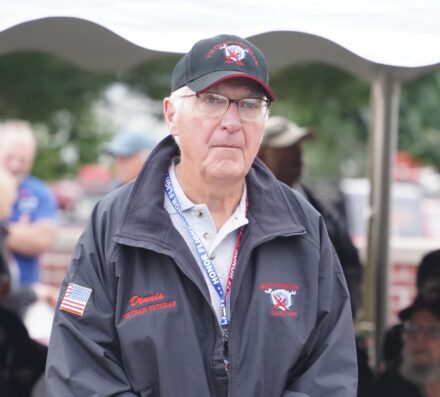 Dennis Bardelcik, US Air Force 1969–1976, Vietnam Era
Dennis Bardelcik began his United States Air Force service at the age of 19. Inspired by his older brother, Dennis chose the Air Force and trained as a Navigation and Bombing Trainer Specialist, working with advanced flight simulator technology.
During his military career, Dennis worked with F-4 Phantom flight simulators and later served at RAF Upper Heyford in England. His work with classified simulator technology played an important role in preparing aircrews for combat missions.
After leaving active duty, Dennis continued his career in flight simulation with Singer Link, eventually relocating to the Plattsburgh area. He worked on F-111 simulators at the former Plattsburgh Air Force Base and witnessed remarkable advances in aviation technology throughout his career.
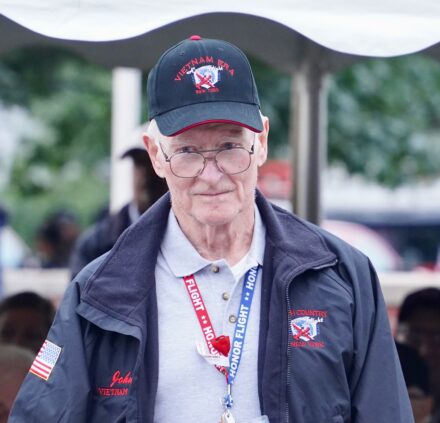 John Buttolph III, US Army 1964–1967, Cold War
John Buttolph III served in the United States Army from 1964 to 1967 during the Vietnam War era and the height of the Cold War. After completing two years of Army ROTC at Hillyer College, John chose to enlist rather than wait to be drafted.
Following basic training, John received specialized training in military intelligence at Fort Holabird. He was then assigned to the 513th Military Intelligence Group, Berlin Station, where he spent approximately two and a half years serving in West Berlin.
The 513th conducted Cold War intelligence operations, including espionage, counterintelligence, and signal and human intelligence collection and technical support throughout Europe.
Stationed near the famous Checkpoint Charlie, John experienced life in a city divided between East and West during one of the tensest periods of the Cold War. He remembers his time in Berlin as exciting, unique, and unlike anything else he could have experienced.
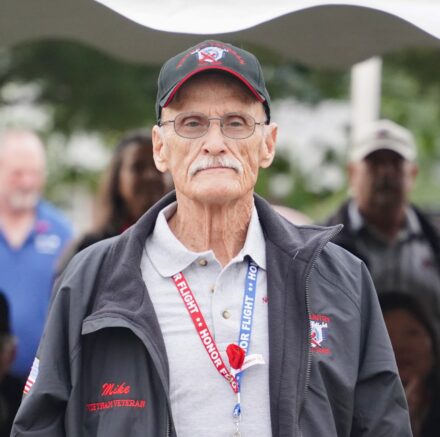 Michael McCole, US Coast Guard 1965-2000, Vietnam Era
Michael McCole enlisted in the United States Coast Guard in June 1965, just days after graduating from high school at the age of 17. After basic training at Cape May, New Jersey, he served aboard the USCGC Cuyahoga, eventually becoming a Gunner’s Mate.
Michael deployed to Vietnam in support of Operation Market Time, helping prevent the movement of enemy supplies along the Vietnamese coastline. As a Gunner’s Mate Second Class, he served in the ship’s five-inch gun mount during combat operations.
After active duty, Michael returned to civilian life before reenlisting in the Coast Guard Reserve. He continued serving for another 28 years, ultimately retiring as a Master Chief Gunner’s Mate with more than 33 years of total service.
Throughout his Reserve career, Michael also became a certified small arms and marksmanship instructor, spending nearly two decades training Coast Guard personnel in firearms safety and qualification.
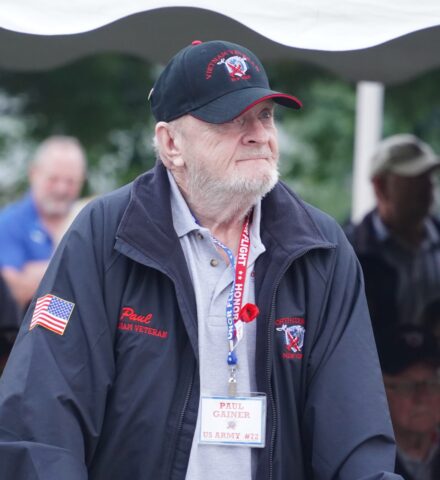 Paul Gainer, US Army 1966–1972, Vietnam
Paul Gainer was drafted into the United States Army in January 1966 at the age of 19. After basic training at Fort Dix, New Jersey, he trained in the Signal Corps as a pole lineman before preparing for deployment to Vietnam.
Once deployed, Paul spent 21 days traveling by ship from California to Vietnam, crossing the International Date Line along the way. Once there, he was assigned to the Bearcat area, where he worked in communications, repairing radios, climbing poles, and performing guard duty.
Later, Paul transferred to an ammunition depot near Pleiku, where he drove a 2½-ton “deuce and a half” truck transporting ammunition and ordnance.
After about a year in Vietnam, Paul returned home aboard a C-130. Coming home was difficult, as he witnessed firsthand the poor treatment many Vietnam veterans received. Despite those challenges, Paul proudly served his country and carried the experiences of his service with him throughout his life.
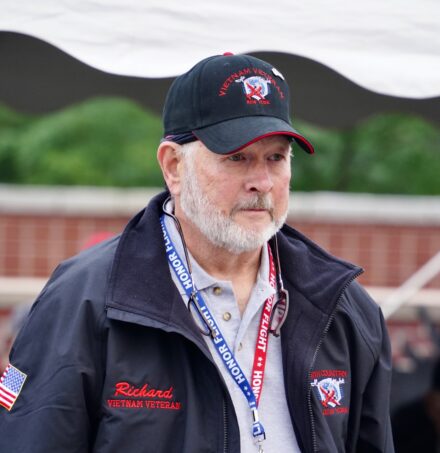 Richard Harwood, US Marine Corps, 1975–1995, Vietnam Era /Cold War
Richard Harwood began his United States Marine Corps journey at just 17 years old, enlisting with his mother’s hesitant permission. He entered Marine Corps recruit training, where he excelled as a rifleman and was meritoriously promoted as the highest shooter in his platoon.
Richard went on to train as a combat engineer and heavy equipment operator before serving at Camp Pendleton and later in Okinawa, Japan. During his time overseas, he supported Marines throughout Asia, traveling to the Philippines, Korea, and Taiwan while delivering critical parts and supplies to field units.
Richard later began a long and successful career in Marine Corps recruiting, serving in Oswego, Syracuse, Albany, and eventually Plattsburgh. While in Plattsburgh, he rebuilt the recruiting station into one of the top-performing stations in the district, earning Station of the Year.
Richard retired from the Marine Corps in 1995 as a Gunnery Sergeant after 20 years of dedicated service.
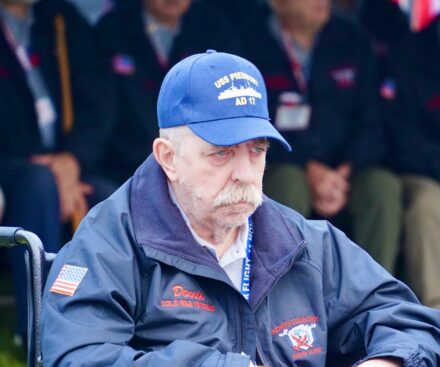 Dennis Hatch, US Navy 1976–1982, Cold War
Dennis Hatch proudly served during the Cold War era aboard the USS Piedmont. Dennis originally hoped to become an electrician in the Navy. During his testing, he was given what he was told were six numbers and asked to identify them. Unable to see the numbers, he thought the tester was joking with him. He soon learned that he was color blind, which prevented him from pursuing electrical work. Instead, he was assigned as a Navy patternmaker.
Aboard the USS Piedmont, Dennis worked in the ship’s foundry, creating detailed patterns from wood and plastic that were used to cast replacement metal parts. His work required precision and craftsmanship and helped keep the ship’s equipment and systems operating.
One of Dennis’s favorite memories came while carving a chess piece. An officer noticed his work and reminded him he was using Navy materials. Later, the chief in charge discovered the piece and, rather than disciplining Dennis, quietly asked him to make two chess sets—one for the chief and one for Dennis. Dennis still has his chess set today, a lasting reminder of his service.
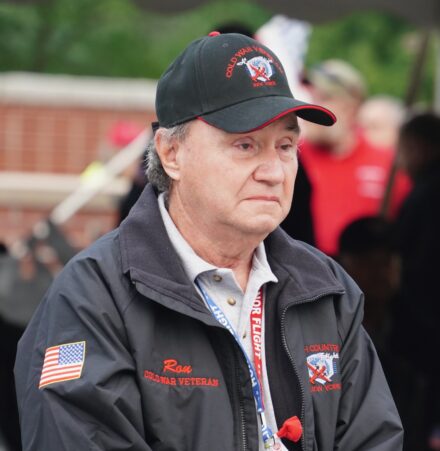 Ron LeBlanc, US Army 1970–2005, Vietnam Era/ Cold War/Global War on Terror Era
Ron LeBlanc began his military career at age 22 when he joined the U.S. Army Reserves. What he expected to be a short commitment became a 35-year career in the Army Reserve and National Guard.
Ron joined during the Vietnam War era, knowing he could potentially be drafted. Encouraged by his father, who had served in the Plattsburgh Army Reserve, Ron chose to serve voluntarily.
Throughout his career, Ron served with units in New York, Vermont, and Massachusetts, beginning as a clerk typist before moving into computer operations, network security, and computer warfare training.
One of the highlights of Ron’s career was teaching at Norwich University, where he trained soldiers from around the world, including many from South America, in emerging military technologies. He valued the opportunity to work with people from different backgrounds and cultures while preparing the next generation of military professionals.
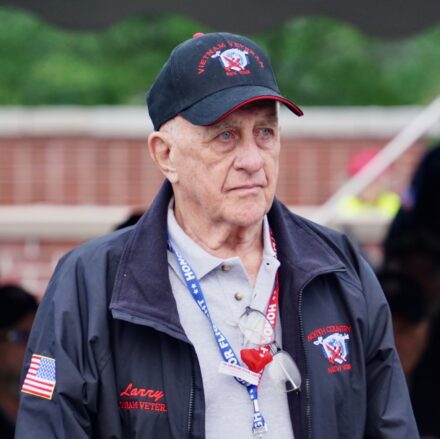 Laurent L’Esperance, US Navy/Vermont Army National Guard, 1964–2002 Vietnam
Laurent L’Esperance comes from a long family tradition of military service and went on to dedicate more than three decades of his own life to serving his country.
Laurent enlisted in the U.S. Navy at about 20 years old, with the goal of pursuing medical training. After becoming a Navy corpsman, he was assigned to the Marine Corps at Camp Lejeune before deploying to Vietnam.
During his year in Vietnam, Laurent served as a combat corpsman with the 3rd Battalion, 5th Marines, providing medical care to Marines on the ground in areas including Chu Lai and Phu Bai. He witnessed the devastating realities of combat and cared for wounded service members during some of the most difficult moments of the war, including the Tet Offensive. For his actions and service, Laurent was awarded the Bronze Star.
After leaving active duty in 1968, Laurent continued serving in the Vermont Army National Guard for another 32 years, eventually rising to the rank of First Sergeant with a medical company.
Laurent is traveling today with his son-in-law Paul, a US Air Force Veteran who served in Iraq.
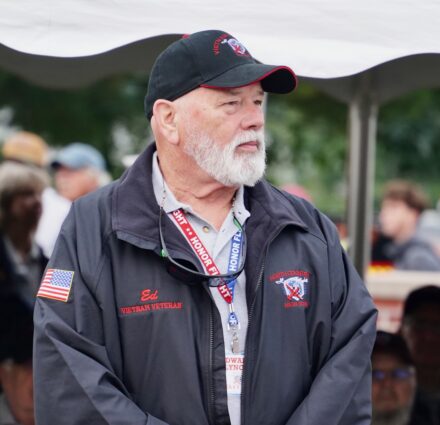 Edward Lynch, US Navy 1969–1970, Vietnam Era
Edward Lynch was 18 years old when he enlisted in the United States Navy, following a strong family tradition of military service. His grandfather served in the Army during World War II, while his father was a Marine who served in the South Pacific. Growing up on Lake Champlain, Edward also had a natural love of the water, making the Navy a fitting choice.
Edward attended gunnery training at Great Lakes, Illinois, His training focused on naval weapons, including the operation, maintenance, and servicing of machine guns and shipboard guns. He then served at Naval Station Great Lakes. His assignments included working at the base marina, where he helped maintain boats used for training and operations.
Edward served during the turbulent Vietnam era. Following the unrest and anti-war demonstrations surrounding the 1968 Democratic National Convention in Chicago, he remembers the base being secured with razor wire and machine-gun positions. He witnessed demonstrations and the hostility sometimes directed toward servicemen.
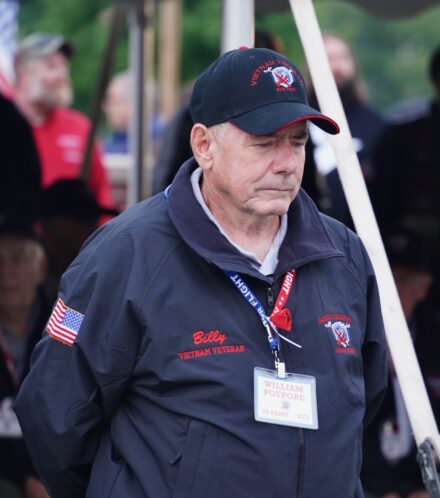 William Clark Mason, US Air Force 1961-1965, Vietnam
Bill was 17, right out of high school and unable to afford college, signed up for the US Air Force before he would be drafted. He wanted to find a way to work, and the US Air Force gave him that opportunity.
When he was at boot camp at Lackland Air Force Base, his superior said he looked like a good person and assigned him as a road guard.
Bill did electronics training for 22 weeks at Keesler Air Force Base. He was working on a specific type of electronics machinery with the Ground Electronics Engineering Installation Agency that was on all the planes. It other words, it was the radar that directed the planes.
He traveled around to various areas to help those having difficulty with radar equipment and to protect the northern borders. While on one trip here to the North Country in 1964, he met his wife, Linda. That same year he and three other personnel received a letter of commendation recognizing their outstanding performance installing C&E equipment at a facility at the US Naval Air Station in Key West, Florida.
Bill says without his service he never would’ve grown up. He and his wife, Linda, celebrated their 61st anniversary yesterday and Bill credits Linda for helping him come out of his shell and to be a better person.
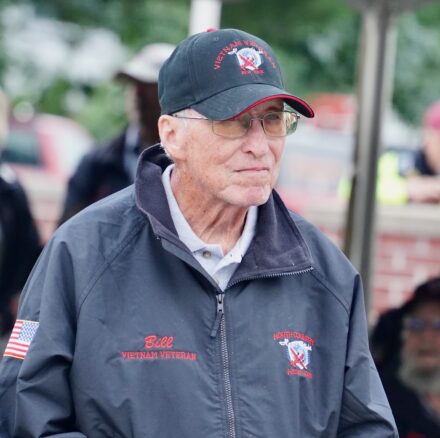 William Poupore, US Army 1967–1969, Vietnam
William Poupore was drafted into the United States Army at the age of 19. A lifelong resident of Churubusco, New York, William grew up on his family’s dairy farm before answering the call to serve his country.
After completing his training, William was deployed to Vietnam with the 4th Infantry Division. He spent a year serving in the Central Highlands near Pleiku, close to the Cambodian border. As an infantryman, he spent nearly ten and a half months in the field, facing intense rain, thick jungle, steep mountains, and difficult terrain.
During his final six months in Vietnam, William volunteered for reconnaissance duty with Echo Company, serving as a scout in small teams moving through the jungle ahead of larger units.
After returning home, William continued his military service with the U.S. Army Reserve in Plattsburgh, eventually reaching the rank of Sergeant.
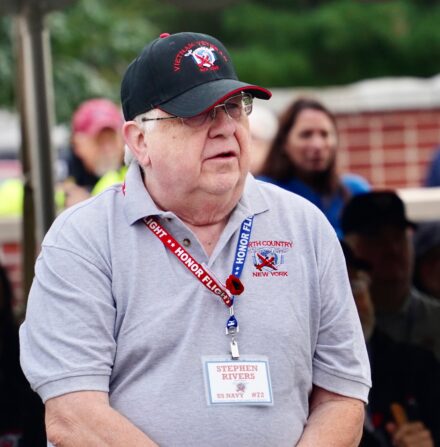 Stephen Rivers, US Navy, 1966–1972, Vietnam
Stephen joined the United States Navy Reserve while still in high school. At just 18 years old, he completed boot camp in Rhode Island and earned the rank of E-3 before reporting for active duty.
Stephen served aboard the USS Inflict, a wooden ocean minesweeper operating in the Western Pacific during the Vietnam War. After crossing the Pacific on the small ship through rough seas, he volunteered to become a Radarman. Through on-the-job training, he worked in the Combat Information Center, monitoring radar during minesweeping missions off the coast of Vietnam.
Stephen quickly earned the rank of Petty Officer Third Class. His commanding officer even wrote to his parents, noting that Stephen was believed to be one of the youngest petty officers serving in the Western Pacific at the time.
When Stephen returned home via California, he remembers being met by anti-war protesters rather than the appreciation veterans deserved.
After completing his active-duty service, Stephen fulfilled the remainder of his six-year commitment in the Naval Reserve, where he briefly taught radar training.
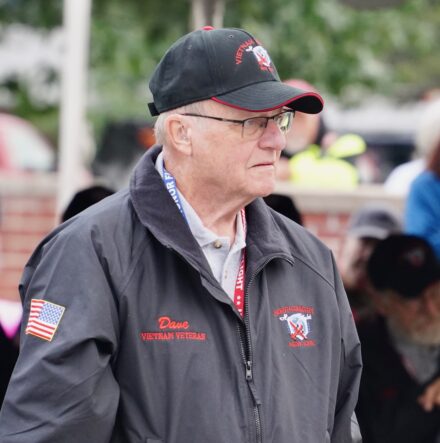 David Swarts, US Army 1965-1967, Vietnam
David Swarts was drafted into the United States Army and began his military training at Fort Jackson, South Carolina, followed by Fort Knox, Kentucky.
David’s ability to type quickly became an unexpected asset during his service, leading him to administrative duties. He was responsible for morning reports, personnel records, promotions, transfers, and official correspondence. His attention to detail and dedication earned him an impressive four promotions in just two years.
David spent approximately 19½ months serving in Germany, where his behind-the-scenes work helped keep his unit running smoothly. He took great pride in knowing that his efforts supported his fellow soldiers and helped ensure important personnel matters were handled correctly.
Military service was a family tradition for David. Five of his six brothers also served, including one brother who made the ultimate sacrifice, losing his life during World War II before David was born. David will be accompanied by his daughter, Autumn, a US Navy veteran.
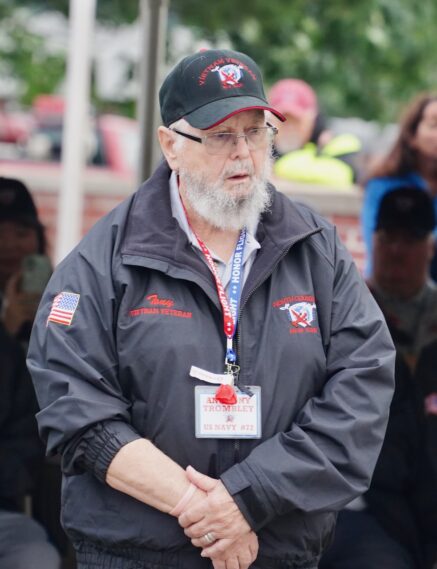 Anthony Trombley, US Navy 1963–1971, Vietnam Era
Anthony Trombley served eight years in the United States Navy during the Vietnam era, spending most of his career aboard a nuclear-powered submarine.
After boot camp at Great Lakes, Anthony volunteered for the Navy’s nuclear power program. He completed specialized training in Machinist’s Mate operations, nuclear power, prototype systems, and submarine school in Groton, Connecticut.
Anthony was assigned to the USS Paddle, where he served as a machinist responsible for the mechanical systems supporting the submarine’s nuclear reactor plant, including turbines and pumps. He also completed specialized emergency welding training, preparing him to make critical repairs while at sea.
During his service, Anthony spent extended periods underwater, including an 84-day patrol. His work required tremendous technical skill, discipline, and responsibility while serving aboard a submarine with a crew of approximately 100 sailors.
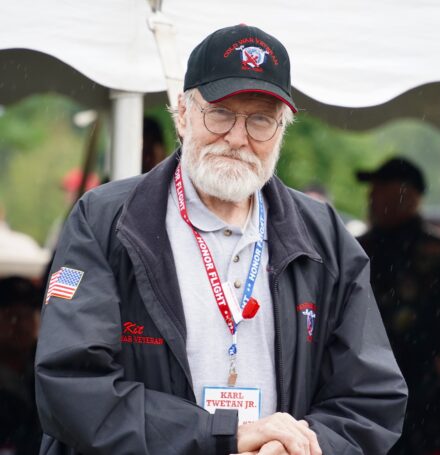 Karl “Kit” Twetan Jr., US Navy 1969-1974, Cold War
After graduating from Canton College with an engineering degree, Karl enlisted in the Navy and trained as an electrician.
Kit spent his first two years serving aboard tugboats in Norfolk, Virginia, supporting ships throughout the harbor. He remembers the tugboats as some of the best duty he could have asked for. The small fleet handled just about everything in the harbor.
He later served aboard the USS El Paso, an amphibious troop transport carrying Marines throughout the Caribbean. As an electrician, Kit was responsible for the ship’s cranes and landing craft, making sure the equipment was ready whenever Marines needed to go ashore. They visited islands throughout the Caribbean, Panama, and the U.S. Virgin Islands.
One of the most remarkable moments of his service came when he spotted a World War II destroyer being towed through the harbor. The ship’s name looked familiar, and he realized it was the very ship his father had served aboard during World War II. A remarkable connection between two generations of Navy service.
Looking back, Kit considers his Navy years a rewarding experience filled with good friends, great memories, and a deep sense of pride in having served his country.
Posted: September 6th, 2026 under Adirondack Region News, Community Events, Faces of Peru, General News, Honor Flights, National History, National News, Northern NY News, Peru News, Peru resident news/accomplishments, Statewide News, Upstate New York, Veterans' News.