Why the Mohawk occupation of a former Adirondack summer camp matters today
Posted: November 16th, 2022 under Adirondack Region News, General News, Law Enforcement News, Northern NY News, Peru/Regional History.
Comments: none
A free community news service for Peru, NY

Posted: November 16th, 2022 under Adirondack Region News, General News, Law Enforcement News, Northern NY News, Peru/Regional History.
Comments: none
Posted: November 16th, 2022 under Adirondack Region News, Business News, Community Events, Northern NY News.
Comments: none

Posted: November 16th, 2022 under Arts and Entertainment, Education News, Peru News, Peru School News, Town Board News, Youth News.
Comments: none

Elm Street
Elm Street
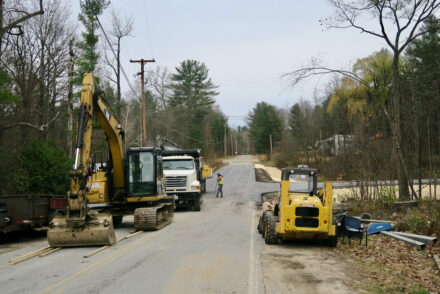
Telegraph Road – Sullivan Road intersection
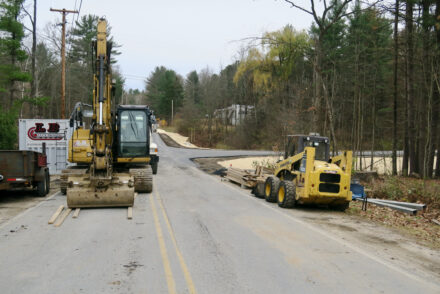
Telegraph Road – Sullivan Road intersection
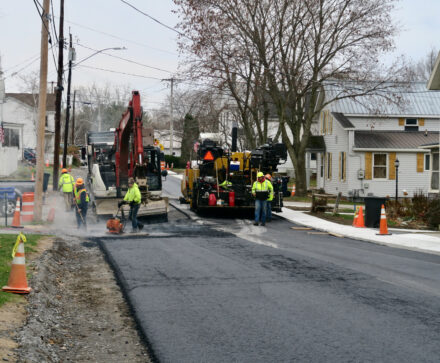
Luck Brothers Inc. has almost completed two major jobs in the Town of Peru. Today its men were paving Elm St., phase #2 of the sewer system upgrade project. At the Telegraph and Sullivan Road intersection, they’re about to complete a major culvert replacement project. The paving appears to be complete.
Posted: November 15th, 2022 under Highway Dept. News, Peru News.
Comments: none

 IBSF
IBSFPosted: November 15th, 2022 under Adirondack Region News, Northern NY News.
Comments: none
 “From April 1, 2020 through March 31, 2021, the state made 218.2 million traditional and temporary UI payments totaling over $76.3 billion, an increase of nearly 3,140% over the amount paid in the prior state fiscal year. Using the U.S. DOL’s estimated fraud rate for New York’s traditional UI program for SFY 2020-21, this would equate to approximately $11 billion lost to fraud in that fiscal year.”
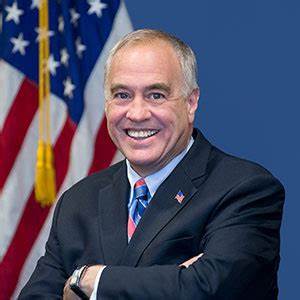
The state Department of Labor’s (DOL) failure to replace its long-troubled Unemployment Insurance (UI) system and ad hoc workarounds to compensate for the old system weakened oversight and ultimately contributed to estimated billions of dollars in improper payments during the COVID-19 pandemic, according to an audit released today by State Comptroller Thomas P. DiNapoli. DOL refused to provide auditors with the data that would have enabled auditors to calculate the precise amount of improper payments and was slow to provide requested information that delayed the completion of the audit. The audit examined the period from Jan. 2020 to March 2022.
“The state Department of Labor’s antiquated UI system was ill-equipped to handle the challenges posed by the extraordinary demand caused by the pandemic for unemployment benefits and more lenient federal eligibility requirements,” DiNapoli said. “The agency resorted to stop-gap measures to paper over problems, and this proved to be costly to the state, businesses, and New Yorkers.” DiNapoli said. “The department needs to recoup fraudulent payments and correct its mistakes. I was pleased the department agreed with our recommendations and is moving to implement them.”
DOL officials did not heed warnings as far back as 2010 that its UI system was out of date, nor did it address issues identified in a 2015 State Comptroller’s audit. The system lacked the resources necessary to adjust to new laws or handle workload surges –– a dire forecast with disastrous consequences during the pandemic. Not only did DOL have to manage an unprecedented volume of traditional UI benefit claims, but it also administered UI benefits for the temporary programs created by the federal Coronavirus Aid, Relief, and Economic Security Act (CARES Act). These temporary federal benefits, with less stringent eligibility requirements, contributed to a dramatic increase in UI claims.
Even before the pandemic, the U.S. DOL reported New York’s traditional UI estimated improper payment rate at 10.34%, including a fraud rate of 4.51%, in State Fiscal Year (SFY) 2019-20, exceeding the federal performance threshold of 10%. Unlike temporary programs which are funded 100% by the federal government, New York’s UI program is funded by taxes collected from employers. With the increase of claims during the pandemic, U.S. DOL’s estimated improper payment rate in New York’s UI program increased significantly to 28.89% including a fraud rate of 17.59% in SFY 2021-22.
From April 1, 2020 through March 31, 2021, the state made 218.2 million traditional and temporary UI payments totaling over $76.3 billion, an increase of nearly 3,140% over the amount paid in the prior state fiscal year. Using the U.S. DOL’s estimated fraud rate for New York’s traditional UI program for SFY 2020-21, this would equate to approximately $11 billion lost to fraud in that fiscal year. This likely understates the actual amount, as New York DOL acknowledged that the temporary programs had a significantly higher risk of fraud.
Auditors found that during the pandemic DOL had to compensate for its outdated system by overriding existing controls designed to prevent improper payments. DOL’s “pay and chase” approach increased the risk of overpayments, payments charged to the wrong funding source, and fraud. For instance:
The outdated system also created obstacles to monitoring and analyzing fraudulent claims and for making operational decisions. Auditors found that DOL could not identify the root cause of overpayments and fraud and did not implement controls to address weaknesses in the system. During the audit, DOL was unable to provide auditors with information to support their management and response to fraudulent claims and could not account for:
DOL’s failure to provide auditors with information and its slow response to requests delayed the audit’s completion. DOL was unable to provide supporting documentation on the over $36 billion in fraudulent claims the Commissioner of Labor said that it had prevented. It also could not explain to auditors why the estimated number of frauds for traditional UI claims more than tripled during SFY 2020-21, nor was it willing to provide data to auditors that would enable them to perform their own independent analysis to assess the amount of fraudulent claims.
This information is critical for New Yorkers because during the pandemic the state had to borrow from the federal government to support UI claims. It had a loan balance from the federal UI trust fund that averaged $9.3 billion from September 2021 through April 2022 which now stands at about $8 billion. This loan must be paid back with interest at the expense of New York’s employers. Previous DiNapoli reports identified that borrowing from the federal UI trust fund has a significant cost impact for businesses operating in New York State.
Auditors also found that while DOL repeatedly pointed to identity theft as the major cause of fraud within the program, specifically for the temporary benefit programs, it did not implement a critical system to stop identity theft, a program called ID.me, until February 2021, or nearly a full year after these temporary programs were put in place and approximately 80% of UI claims had already been made.
In implementing ID.me, DOL failed to capture information to ensure it not only prevented fraudulent claims but also balanced the ease of access for legitimate applicants. For example, groups like seniors, lower income people and recently migrated individuals were identified in a 2018 report by ID.me as being particularly disadvantaged in proving their identity online. DOL acknowledged that certain groups may encounter difficulties with the verification process using ID.me, but did not capture information on which applicants had difficulty with the verification process to enable it to address these issues in the future.
DiNapoli’s auditors also found DOL did not take some critical steps to secure its UI system and data. As a result, DOL has minimal assurance that its substantial personal information assets are protected against loss or theft. For example, auditors determined DOL did not classify data on its UI system, failed to encrypt certain information, did not enforce strong access controls or authentication rules, and did not have a policy in place to ensure systems logs were monitored. Some of its changes to the UI system made in response to the pandemic did not meet all the necessary requirements of the State’s Office of Information Technology Services (ITS) Change Management Process and Policy, intended to ensure the mitigation of risks and minimize disruption of critical services.
The audit recommended DOL:
Department officials generally agreed with the audit’s findings and recommendations.
Audit
Department of Labor: Controls and Management of the Unemployment Insurance System
Posted: November 15th, 2022 under Heathcare News, Peru/Regional History, State Government News.
Comments: none
Posted: November 15th, 2022 under Peru News, Town Board News.
Comments: none
Posted: November 15th, 2022 under Education News, Northern NY News, Peru School News, Peru/Regional History.
Comments: none
Posted: November 15th, 2022 under Charity Events, Law Enforcement News, Northern NY News.
Comments: none
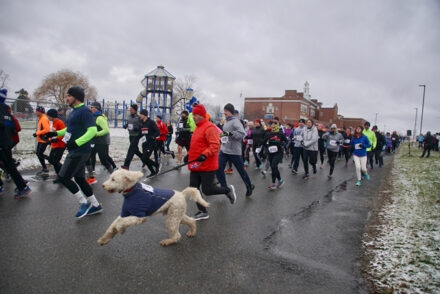
The Peru New York Lions Club will host this year’s 45th Annual John P Adams Memorial Turkey Trot on Thanksgiving Day. This will be a live as well as a virtual event. Pre-registration for the 5K and 10K runs found on adirondackcoastevents.com , Click on Upcoming races, then Peru Lion Turkey Trot. Follow the prompts for pre-registration and information.
For additional information, contact:
Tom Brown fricfrom54@gmail.com
Ed Eisele bigolddivot@yahoo.com
Posted: November 15th, 2022 under Community Events, Northern NY News, Peru News.
Comments: none
Posted: November 15th, 2022 under Education News, State Government News.
Comments: 2
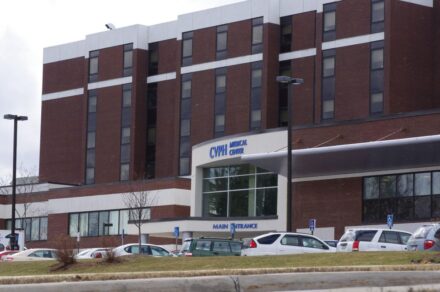
77 Plaza Blvd Office to undergo renovations; Outpatient procedures continue
PLATTSBURGH, NY Gastroenterology Associates of Plattsburgh has closed its office at 77 Plaza Boulevard and beginning November 28, Drs. Eugene Cassone and John Homer will see patients at their temporary office located at 210 Cornelia St., Suite 303. Together with Dr. Young-Mee Lee they will practice under a new name, CVPH Gastroenterology as part of the CVPH Medical Group.
The Plaza Boulevard office space will undergo renovations that include updates designed to enhance the patient and staff experience. The scope and timeline for the project are still being finalized.
While the office relocates, colonoscopies, endoscopies and other gastroenterological procedures will take place as scheduled. The phone, (518) 825-4437 and fax numbers, (518) 825-4435, remain the same.
“Dr. Cassone, Dr. Homer and their team bring a wealth of experience in caring for patients with common, complex and chronic digestive conditions and their dedication to excellent patient care to the CVPH Medical Group. We’re so pleased to welcome them to CVPH and are excited to continue building our Gastroenterology team with Dr. Lee,” explained Thomas Saul, University of Vermont Health Network – Champlain Valley Physicians Hospital (CVPH) Regional Vice President of Practice Operations.
Posted: November 15th, 2022 under Adirondack Region News, Heathcare News, Northern NY News.
Comments: none
Posted: November 15th, 2022 under National News, Peru/Regional History.
Comments: none
Posted: November 15th, 2022 under Heathcare News, Northern NY News, Peru/Regional History.
Comments: none
Posted: November 14th, 2022 under Northern NY News, Peru News, Regional NY-VT News, Weather News/History.
Comments: none
Posted: November 14th, 2022 under Arts and Entertainment, Northern NY News, Peru School News, Religious News.
Comments: none
New York’s five largest school districts received $8.6 billion in federal pandemic relief funds, and analysis by New York State Comptroller Thomas P. DiNapoli released today found sizeable differences in how school districts are using the funds. The New York City Department of Education plans to use a smaller share of the billions of dollars of its federal aid to help close pandemic learning gaps than other large school districts, both in New York and nationwide. The analysis looked at New York City, Yonkers, Buffalo, Syracuse and Rochester, the “Big Five” school districts in New York, as well as national peer school districts.
“Many students fell behind in their studies during the COVID-19 pandemic and are still struggling to catch up,” DiNapoli said. “The federal government responded to the pandemic by providing significant one-time aid to school districts to support their operations and help students make up for lost learning. New York’s school districts should carefully monitor students’ academic recovery and report on their progress to allow policy makers and the public to assess the effectiveness of the funding decisions made.”
The federal government has provided nearly $190 billion to schools since the beginning of the pandemic. The funding was passed in three rounds of legislation which created and funded the Elementary and Secondary School Emergency Relief Fund (ESSER). The three rounds of funding are referred to as ESSER I, ESSER II and ESSER III.
School districts in New York state received a total of more than $14 billion from the Coronavirus Aid, Relief and Economic Security (CARES) Act, the Coronavirus Response and Relief Supplemental Appropriations Act (CRRSA), and the American Rescue Plan (ARP) Act. New York City received $7.66 billion, with $6.9 billion of that coming in the second and third rounds of funding.
DiNapoli’s analysis found that New York City initially planned to spend 30.6% of the $6.9 billion on “operational supports,” which included school reopening costs, teacher retention, new learning technology and spending on existing programs. Rochester and Buffalo set aside around 62% of their funding for operational spending and Syracuse and Yonkers set aside 36% and 38%, respectively.
The second-largest part of New York City’s allocation, $1.98 billion, or 28.4%, targeted the full expansion of the city’s 3-K initiative (universal free educational childcare for 3-year-olds), which began before the pandemic hit. While 3-K expansion may help boost enrollment, attract and retain families with younger children, the city has yet to identify how it will pay for the entirety of the program’s expected $752 million annual cost after the federal funding is gone. The city has recently suggested it may change its plans from a rapid expansion of 3-K and instead work to ensure the existing seats are of high-quality.
None of the other Big Five districts planned to use more than two percent for early childhood education. New York City’s decision to fund the 3-K program with federal money also stands in contrast to other districts across the country as school districts in Los Angeles, Miami, Chicago and Clark County (Las Vegas) have allotted from 0.4% to 17.1% of their funds for early childhood programs.
The ARP Act, which provided ESSER III, the largest of the three rounds of relief funding for education, stressed the importance of helping students recover the loss of learning that resulted from the pandemic. While remote learning was often a necessity during the pandemic, studies have found that it is not as effective as in-person learning, and that many students lost significant progress during the pandemic.
Recent testing data shows that students had substantial loss of learning nationally and in New York state and New York City. State standardized tests for grades 3 to 8 in New York City show math scores fell by 7.7% across all grades. Testing scores for English were mixed, with younger grades experiencing a measurable decline, while older grades saw modest improvement.
DiNapoli’s report found that academic recovery, geared to help those students whose educations were interrupted, initially received 16.5% of New York City’s ESSER III funding, falling short of the 20% minimum required by law. The city’s adopted FY 2023 budget repurposed an additional $176 million of ESSER III funding in FY 2023 to support its summer school program, “Summer Rising,” for another year, which would help it reach the required threshold for academic recovery purposes.
Recently, New York City officials also confirmed that they intend to provide $200 million in unspent ESSER aid to schools that would otherwise have seen a reduction in local formula-based funding due to declining enrollment; the extent to which such an allocation might count as supporting academic recovery is unclear.
Among the rest of New York’s Big Five school districts, Yonkers set aside the largest share of ESSER III funds for academic recovery (44.4%), followed by Syracuse (37.1%), Buffalo (30.1%), and Rochester (20.4%). In contrast to New York City, Los Angeles has dedicated 60.5% of its ESSER III funds for academic recovery.
Despite including measures for identifying student needs and tracking academic recovery as part of the ARP/ESSER III application process, only one of the Big Five districts reviewed (Buffalo) has provided regular public updates on the status of those measures at the individual school level, which are important for helping parents understand the effectiveness of fund distribution to individual schools. All districts can also provide better clarity on how funds are being linked to addressing actual lost instructional time rather than backfilling existing operations, particularly for those schools with larger disadvantaged populations.
DiNapoli’s report notes that while enrollment in most of the state’s Big Five districts was stable or declining slightly in the years immediately preceding the pandemic, the virus led to substantial enrollment declines in all five districts. In the 2021-22 school year, Buffalo was the only district to have more students enrolled than it did ten years prior.
Rochester, which had the worst enrollment trends, and New York City both experienced particularly sharp declines. Despite the general decline in enrollment in recent years, charter school enrollment in all five districts has continued to climb, even during the pandemic.
Report
A Comparative Assessment of New York City’s Federal Pandemic Education Aid
Related Reports
Issues Facing New York City’s Agencies: New York City Department of Education
NYC Department of Education Response to the COVID-19 Pandemic
Disruption to Special Education Services: Closing the Gap on Learning Loss from COVID-19
Fiscal Stress Monitoring System – School Districts: School Year 2019-20 Results; 2020-21 Risks
Mental Health Education, Supports, and Services in Schools
Posted: November 14th, 2022 under Education News, Heathcare News, State Government News.
Comments: none
Posted: November 14th, 2022 under General News, Upstate New York.
Comments: none
Posted: November 14th, 2022 under Heathcare News, Upstate New York.
Comments: none

Posted: November 13th, 2022 under Community Events, Northern NY News, Peru News.
Comments: none
Posted: November 13th, 2022 under Education News, Northern NY News, Peru News, Peru resident news/accomplishments, Peru School News, Sports News.
Comments: none


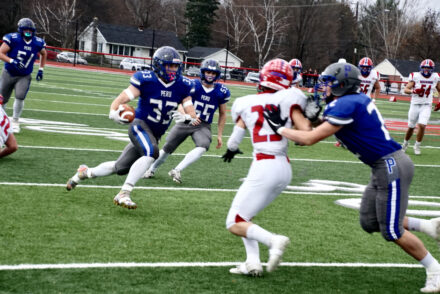
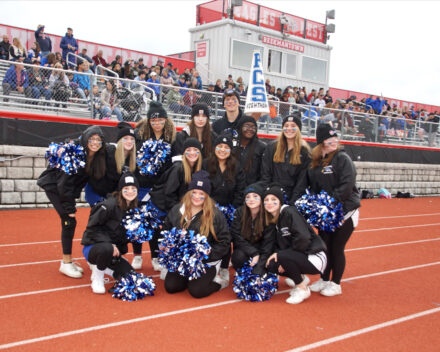
Beekmantown – Saturday, November 12, 2022 – Peru over Massena 44 – 16.
The Nighthawks next game is also in Beekmantown on Saturday, November 19th at 1 p.m. vs. the Ravena-Coeymans-Selkirk Indians.
Posted: November 13th, 2022 under Education News, General News, Peru News, Peru resident news/accomplishments, Peru School News, Peru/Regional History, Sports News.
Comments: none
Posted: November 13th, 2022 under Congressional News, National News, Northern NY News, Political News.
Comments: none
Posted: November 13th, 2022 under Peru/Regional History, Political News, Regional NY-VT News.
Comments: none
Posted: November 13th, 2022 under Law Enforcement News, Political News, Regional NY-VT News.
Comments: none