February 2026
S M T W T F S
1234567
891011121314
15161718192021
22232425262728

News Categories

Site search

More About The Peru Gazette

The editor is John Ryan at email: perugazette@gmail.com. The Peru Gazette is a free community, education and information website. It is non-commercial and does not accept paid advertising.

Comment Policy

The Peru Gazette welcomes comments on posted stories. The author MUST include his/her first and last name. No  foul or libelous language permitted. The Peru Gazette reserves the right to not publish a comment.

Recent Comments

Alstom wins $1.1 billion order for additional railcars and locomotives

The North Country Chamber of Commerce is celebrating the official award to Alstom of a $1.1 billion order for an additional 200 Multilevel III commuter railcars and 12 ALP 45 dual power locomotives. This order is on top of 174 Multilevel III railcars previously ordered and currently under production at Alstom’s Plattsburgh plant.

“This is the sort of order that will bring years of work to the Plattsburgh plant with additional great jobs,” says Garry Douglas, Chamber President. “It is a direct testament to the clear satisfaction of this major customer with the great vehicles produced by Alstom’s Plattsburgh workforce and its suppliers.”

Notes Douglas, “On top of this week’s official opening of the Micro Bird bus plant with accelerating growth, our region’s transportation equipment cluster is in strong condition for the years ahead. We congratulate our partners at Alstom and are already working with them to assist with training needs. And next week, both Alstom and Micro Bird will join us in two days of high-level meetings in Washington. Onward and upward!”

LEARN MORE >>> https://bit.ly/4m4CCyj

See less

Recent Regional NYS Forest Ranger Actions

Town of Keene
Essex County
Wildland Fire: On Aug 31 at 6:30 p.m., Ray Brook Dispatch received a call from a hiker on Noonmark Mountain reporting sustained smoke in the sky. At 3:32 a.m., three Forest Rangers located a fire approximately four miles from the Round Pond trailhead, near Gravestone Brook on the side of Bear Den Mountain. Rangers began suppressing the one-acre fire using hand tools and determined it was caused by lightning. At 7:30 a.m., New York State Police Pilot Beck flew in with pumps and hoses. The fire was burning approximately three feet deep into the duff. By 8 p.m., Rangers contained the fire and on Sept. 4, Rangers declared the fire officially out.

Bear Den fire
Bear Den fire
Bear Den fire
Bear Den fire

Town of Arietta
Hamilton County
Wildland Fire: On Sept. 1 at 8:20 p.m., hikers in the West Canada Lakes Wilderness called Forest Rangers to report a fire. Rangers Hamm and Thompson responded to Whitney Lake to investigate and spent the night on site. Ranger Nally responded in the morning to assist. On Sept. 2 at 9 p.m., Rangers contained the 0.25-acre fire.

Whitney Lake fire
Whitney Lake fire

Town of Thurman

Warren County
Wildland Fire: On Sept. 4 at 3 p.m., Warren County Dispatch requested Forest Ranger assistance for a structure fire that spread to nearby brush. Rangers Donegan and Kabrehl joined the Chester, Riverside, Stony Creek, Thurman, and Warrensburg fire departments on the scene. By 4:45 p.m., fire crews contained the 0.25-acre fire.

Thurman fire
Thurman fire

Town of Keene
Essex County
Wilderness Search: On Sept. 7 at 8 p.m., Ray Brook Dispatch received a call from a hiker lost and separated from their hiking party on Mount Marcy. Coordinates placed the hiker near the summit of Skylight Mountain. Rangers Foutch and H. Praczkajlo responded to search for the 39-year-old from Michigan. At 9:44 p.m., the other member of the hiking party called to report they were also lost, near the Van Hoevenberg trail. Rangers Holdridge and Odell responded to search for the second hiker, a 42-year-old, also from Michigan. At 11:51 p.m., they located the second hiker and made their way out to Adirondack Loj. At 2:35 a.m., Rangers located the first hiker and headed down the trail. Rangers reunited the two hikers at 11:16 a.m.

Historian Dr. Alexandria Russell to Speak on Black Women’s Legacies in the American Revolution

Thursday, 18 September 2025, 6:30 p.m. at Krinovitz Recital Hall, Hawkins Hall, at SUNY Plattsburgh

PLATTSBURGH, N.Y. — The Clinton County Historical Association, in partnership with SUNY Plattsburgh’s Office of Diversity, Equity and Inclusion, will host historian Dr. Alexandria Russell for a public lecture on Thursday, September 18, at 6:30 p.m. in the Krinovitz Recital Hall, Hawkins Hall, at SUNY Plattsburgh.

Dr. Russell will discuss the legacies of Black women during the American Revolution and beyond. She is the author of Black Women Legacies: Public History Sites Seen and Unseen (University of Illinois Press, 2024). She recently began serving as executive director of the Boston Women’s Heritage Trail and is a non-resident W.E.B. Du Bois Research Institute Fellow at Harvard University’s Hutchins Center for African & African American Research. In addition, Dr. Russell is founder of Black Women Legacies, a nonprofit organization that supports digitally mapping historic and contemporary memorials of Black women across the globe. She completed her undergraduate studies at the College of Charleston and earned her Ph.D. in history at the University of South Carolina. Prior to her academic career, she worked as a teacher and a Capitol Hill staffer.

This program is sponsored by the Clinton County America250 Committee under the leadership of the Clinton  County Historical Association with funding from a 2025 Special Programs Grant from the Champlain ValleyNational Heritage Partnership. The America250 committee is dedicated to commemorating the America 250th

This event is free and open to the public. Dr. Russell’s book is available at your local library through Clinton Essex Franklin Library Systems at cefls.org. For more information, contact Connie Mandeville, 518-570-9589.

Gov. Hochul highlights continued investment in Northern Border Security

Index Crime Down in Plattsburgh As Gun Seizures Are Up 57 Percent and Extreme Risk Protection Orders Up 26 Percent Across the North Country

Sept. 9, 2025 News Release – Governor Kathy Hochul today updated New Yorkers on the State’s efforts to enhance New York’s Northern Border security and prevent transnational criminal organizations from trafficking guns, drugs and people. During a visit with New York State Police Troop B in Plattsburgh, Governor Hochul highlighted her recent $8 million investment in the FY26 state budget to boost State Police enforcement efforts at the Northern Border, building on previous investments to enhance border security last year.

“Since taking office, I have been clear with New Yorkers that their safety will always be my number one priority,” Governor Hochul said. “By strategically investing in securing our borders, keeping our streets safe and preventing dangerous individuals from illegally trafficking guns, drugs and other illicit items, we are delivering on that promise — and we will continue to do so to ensure safety and security across the North Country.”

State Police Superintendent Steven G. James said, “We appreciate Governor Hochul for funding the strategic investments in personnel, technology and equipment that will be used to combat transnational crime at the northern border. With these new resources, we are better equipped to track cross-border criminal activity, share intelligence with our law enforcement partners, and disrupt criminal networks before they can endanger New Yorkers.”

The $8 million investment in Governor Hochul’s FY26 State Budget provides funding for personnel and equipment enhancements including additional investigators for the FBI Joint Terrorism Task Force in Plattsburgh, six intelligence analysts who provide investigative support for cross-border cases, additional investigators and intelligence analysts for the State Police counter drone initiative, and additional support personnel. Additionally, State Police in the North Country have utilized funding for mobile license plate readers, counter drone equipment and software, and patrol vehicles and boats.

Governor Hochul also directed $127 million for local police agencies across the state to upgrade law enforcement technology, including $2.6 million for police departments in the North Country. More than half a million dollars of that funding was awarded to the Plattsburgh Police Department to enable the purchase of two drones and a 3-D crime scene laser scanner.

Additional funding follows a $5 million commitment from Governor Hochul in FY25 for the New York State Division of Criminal Justice Services and the New York State Police to enhance border security through the purchase of equipment and training that enables better detection of contraband, enhanced drone software, additional license plate readers, and more. Read more »

Senator Kirsten Gellibrand in Plattsburgh with good news for local manufacturers

L-R Site Managing Director Jeff Lambert explained the plant’s operations to Senator Gellibrand

Senator Gellibrand and several of Alstom staff members

Railcars for BART, the Bay Area Rapid Transit in San Francisco.

Plattsburgh, NY: U.S. Senator Kirsten Gillibrand came to Alstom’s Plattsburgh railcar manufacturing facility last Friday with good news. As a member of the Senate’s Appropriations Committee and Transportation subcommittee, she should be able to secure an additional $350,000 for Clinton County’s Institute for Advanced Manufacturing. The appropriation still must be approved by the full Senate and House of Representatives, but Gellibrand appeared to be confident of its ultimate approval.  Assemblyman Billy Jones joined in thanking Gellibrand. Jones resigned from his office effective at midnight Friday to lead the Institute which specializes in training workers in the skills needed by several local manufacturers. 

Gellibrand mentioned Alton’s major contracts for the Long Island Railroad and Metro North, and the company’s importance to New York’s manufacturing sector. She stated that Alstom’s manufacturing operations positively impact 180 businesses in 29 states. Site Managing Director Jeff Lambert, thanked Gellibrand for her longtime support. He noted that Plattsburgh’s site has produced 5,000 railcars over the past thirty years. North Country Chamber of Commerce CEO Gary Douglas pointed to Gellibrand’s being a member of the Senate’s Transportation Subcommittee as a sign of her commitment to New York’s railcar industry.

The railcars produced in Plattsburgh and a sister plant in Hornell, NY, incorporate the latest technology. Jeff Lambert said the Metro North M-9A cars will travel up to 125 miles per hour. Alstom also produces a self-powered railcar for short and local runs.  No locomotive is needed. Last month, Alstom delivered the NextGen Acela, which will carry passengers along the Northeast corridor at speeds up to 165 miles per hour. Astrom manufactures it in Hornell. 

Agenda – Peru Zoning Board of Appeals, Sept. 17 at 7 p.m.

  1. CALL MEETING TO ORDER
  2. PLEDGE OF ALLEGIANCE
  3. ROLL CALL
  4. APPROVAL of  August  2025 minutes
  5. OPEN FLOOR to public hearing
  6. APPLICATIONS:
  1. Z2025-016 Area Variance, Erich Lutz, Matthew Ingram, 280.1-3-12, 3019 Main St.
  1. Z2025-107Area Variance, Leonard Jozwiak II,  768 Bear Swamp Rd, Peru, NY 12972

7. CEO REPORT

8. ADJOURNMENT

Christine Crawford

Codes & Zoning Secretary

Town of Peru

3036 Main St.

Peru, NY 12972

Email:    zoningsecretary@perutown.com

Phone:  518-643-2745 Ext. 106

Fax:         518-643-0078

Hochul to let NY pharmacists prescribe COVID vaccines amid federal policy shift

Click here for the NCPR story 

Period Music at the Battle of Plattsburgh Weekend

** From Seeds They Grew: The Roots Of American Gospel Music, featuring the incomparable Plattsburgh State Gospel Choir led by Dr. Dexter Criss performing a wide variety of acoustic Gospel choral and instrumental renditions characteristic of the time period — Saturday, Sept. 13, 4 p.m. 
** Music of the Night: Mozart’s E-flat Major Serenade, with Daniel Gordon leading members of the always-beloved Adirondack Wind Ensemble in presenting Mozart’s breathtakingly gorgeous Serenade No. 11, along with a charming divertimento by Joseph Haydn — Saturday, Sept. 13, 5:30 p.m. 
**A Masterpiece Returned: Vivaldi’s Four Seasons, featuring Marilyn Reynolds performing the herculean solo part in Vivaldi’s beloved concertos representing each of the four seasons, joined by musicians of Champlain Strings — Sunday, September 14, 1 p.m. 
** Music For Three: Beethoven & More, featuring the all-star lineup of violist Patricia McCarty, guitarist Bill Zito, and flutist Robin Cameron-Phillips presenting Beethoven’s extraordinary Serenade, Opus 8, along with trio sonatas by Georg Philipp Telemann, Tomaso Albinoni, and more — Sunday, September 14, 3 p.m.

How reporters obtained 10,000 police disciplinary records

The New York Times and New York Focus gathered thousands of files from around half of New York’s nearly 500 law enforcement agencies.

Click here for the Times-Union story 

‘No arrests’: In NY, some police can drink, drive and avoid charges

Police Officers crashed their official vehicles, hit other motorists and arrived to work reeking of alcohol. And yet, they sometimes evaded criminal punishment, an investigation found.

Click here for the New York Focus story 

Chad Nichols pleads guilty to charges related to death of Jahfari Joseph

Click here for the MYNBC5 story 

Adirondack Museum’s boat sale sparks debate over historic significance

Click here for the Adirondack Almanac story 

Eight World Cups, National Championship events set for Lake Placid this fall & winter

Click here for the Adirondack Almanac story 

Application period open for state’s entry-level law enforcement civil service exam

Click here for the Adirondack Almanac story 

New coordinator aims to unite Lake Champlain conservation efforts

Click here for the Adirondack Explorer Story 

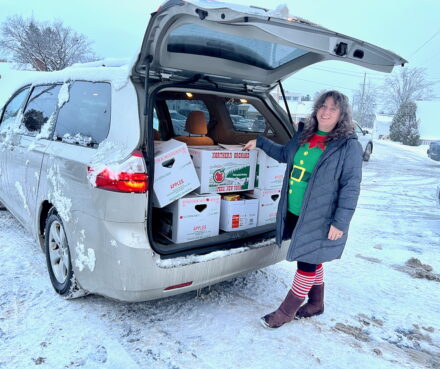
47th Annual Applefest will be here soon than you think!

Gov. Hochul signs bill to strengthen worker and labor protections

Albany, BY – Sept 6, 2025 – Governor Kathy Hochul signed legislation to strengthen and expand labor protections statewide. The package of bills will help create good paying union jobs and strengthen protections for workers across the state. In the absence of a functional National Labor Relations Board under the Trump Administration, the package of bills also includes legislation that seeks to preserve worker rights here in New York.

“Our union laborers are the lifeblood of New York, working tirelessly to continue to build and uplift this great state,” Governor Hochul said. “While the Trump Administration has failed to prioritize a strong National Labor Relations Board and is dismantling unions left and right, here in New York we are taking strong action to protect worker rights and sending a clear message that we will always have the backs of New York’s workers.”

The package of bills includes:

  • Legislation S.8034A/A8590A which authorizes the New York State Public Employment Relations Board to assert jurisdiction over disputes between employers and recognized employee organizations if the National Labor Relations Board is unable to successfully assert jurisdiction.
  • Legislation S.5254/A.6612 which protects public unions from a wage reduction due to their involvement in the investigation of a violation of a workplace violence protection program.
  • Legislation S.12/A.779 which amends the Civil Service Law to strengthen protections for public unions during times of suspensions and workforce layoffs.
  • Legislation S.2457B/A3999B which establishes the Mechanical Insulation Energy Savings Program to provide grants for qualified mechanical insulation expenditures to school districts.
  • Legislation A.2730A requires contractors and subcontractors performing construction work for covered renewable energy systems to have apprenticeship agreements. This legislation also requires thermal energy networks to require contractors and subcontractors to have pre-apprenticeship direct entry providers registered

Vermont receives nearly $16 million for EV charging infrastructure

Click here for the Vermont Public story 

Give a pint, get a pint

Peru – CVPH Donor Center Blood Brive, Monday, September 8,  from 3 p.m. to 6:30 p.m., at St. Augustine’s Parish Center, 3030 Main St. in Peru. There’s a special bonus during September. Every CVPH drive donor will receive a FREE voucher for a pint of Stewart’s Ice Cream Gelato! 

The blood collected by the Donor Center provides more than 95% of the blood used at CVPH and is used to supply other hospitals in Elizabethtown, Malone, Massena, Saranac Lake and Glens Falls.

St. Augustine’s Knights of Columbus Council 7273 is coordinating the drive. 

Agenda – Peru Town Board Regular Meeting

SEPTEMBER 8, 2025, 6:00 PM

  1. Call Meeting to Order
  1. Pledge of Allegiance
  1. Roll Call 
  1. MOTION/DISCUSSION: To Accept Reports from all Departments: (Water/Sewer/Valcour; Highway; Town Clerk; Dog Control; Youth Department; Code/Zoning; Supervisor’s Report; Court; Website; Banking Reports, and JCEO);
  1. MOTION: Acceptance of Minutes for the Regular Meeting of August 25, 2025
  1. Community Input. 
  1. DISCUSSION/MOTION:   Approval for Use of  the Disc Golf @ The Silo Course for Memorial Tournament.
  1. DISCUSSION/MOTION: Approve “GC Contract” Pay Application #2 of Murnane Bldg. Contractors.
  1. DISCUSSION/MOTION: Approve “E Contract” Pay Application #4 of Triangle Electrical Systems, Inc. 
  1. RESOLUTION/DISCUSSION: To Pass a Local Law to Exceed the Tax Cap for the 2026 Budget if Necessary.
  1. RESOLUTION/DISCUSSION: Approve Issuance of Request for Proposal for Accounting Audit Services.
  1. DISCUSSION/MOTION: Peru Town Court Security.
  1. RESOLUTION/DISCUSSION: Acceptance of the Resignation of Code Enforcement Officer.
  1. DISCUSSION: Telegraph Road Culvert Project Engineering Update. 
  1. DISCUSSION: Other Business: Council Comments
  1. DISCUSSION: Other Business: Department Head Comments.
  1. DISCUSSION: Public Comments on Agenda Items Only.
  1. RESOLUTION/DISCUSSION: Pay September 2025 Bills.
  1. MOTION: Adjourn to Executive Session.
  1. MOTION: Return from Executive Session.
  1. MOTION: Adjourn Meeting.

AGENDA – PUBLIC HEARING LOCAL LAW #1 OF 2025 TAX LEVY LIMIT OVERRIDE SEPTEMBER 8, 2025 5:45 PM

  1. Call Meeting To Order
  1. Pledge of Allegiance
  1. Roll Call
  1. MOTION:       To Open the Public Hearing.
  1. DISCUSSION:  PROPOSED Local Law #1 of 2025 – “A Local Law to override the tax levy limit established in General Municipal Law §3-c., (if needed)
  1. MOTION:      To Close the Public Hearing.
  1. MOTION:        Adjourn

St. Augustine’s Community Meal/Soup Kitchen Menu for Wednesday, September 10, 2025

Michigans
Macaroni Salad
Fruit
Dessert

Served 4:30 to 5:30 p.m., take-out only, at St. Augustine’s Parish Center, 3030 Main St., Peru, NY 12972

All are invited and welcome!

North Country Honor Flight #65 Military Biographies

Flight 65 flew on September 6, 2025 

Stanley Abramczyk Jr.US Air Force 1963-1986 Vietnam

Stan planned to join the Navy, but fate stepped in—the only recruiter there that day was from the Air Force. He pitched aircraft maintenance, and Stan never looked back. For 23 years, he loved what he did, reenlisting again and again because it never felt like just a job.

He trained at Lakeland AFB, then served in places like Goose Bay, Stewart AFB, Thailand, Laredo, Selma, Pease, Germany, and finally Plattsburgh. Though he never went to Vietnam, the aircraft he maintained sure did.

Promoted to Aircraft Maintenance Superintendent in Germany, he finished his career at Plattsburgh—then stayed on as a civilian for seven more years until the base closed. Stan took real pride in his work. Whether on the flight line or during deep inspections, keeping those planes mission-ready gave him purpose—and pride in knowing he helped keep them flying.

Richard Baker, US Navy   1960-64   Vietnam 

After training as a Diesel Mechanic at Great Lakes, Dick was stationed on Nantucket Island, Massachusetts, where he maintained generators that powered equipment used to monitor Russian transmissions. His 13 months there passed quickly, and he was transferred to Guantanamo Bay, Cuba—known as Gitmo.

At Gitmo, Dick described himself as a “dry land sailor,” though he also worked on tugs and ferries. He vividly recalled going on high alert during the Cuban Missile Crisis—when his wife was immediately evacuated—and again following President Kennedy’s assassination. He also remembered when Cuba shut off the base’s water supply, and Navy ships had to produce drinking water.

When it came time to reenlist, Dick requested a post in Japan, Italy, or Scotland. The Navy offered a destroyer out of Boston. He declined, saying simply, “I left.” He liked his time in the service and made some great friends.

Steven Burt, US Air Force 1970-1975 Vietnam

After initial training, Steve was assigned to Lowry Air Force Base in Colorado to become a Nuclear Weapons Specialist. His first post was in Duluth, Minnesota, with a Tactical Unit monitoring nuclear activity in extreme cold. He often worked outside to ensure weapons were clean, secure, and fully functional— “No one wants to be hit by a dirty bomb,” he says.

He was later stationed at a NATO base on the Peloponnese peninsula in Greece. The base, once a German facility during World War II, still had bullet holes in the walls. Always armed with an M-16, Steve faced constant threats from a neighboring country rumored to be after nuclear material.

Steve recalls the job as one of high risk and constant tension—where every task demanded precision, and even the smallest error could lead to disaster.

Bruce Carter, US Marine Corps 1964-1968 Vietnam

Bruce left Montreal on a Greyhound bus to join the Marines. They arrived at Parris Island after midnight, and as soon as he stepped onto the footprints, the drill instructor barked, “You maggots woke me up.” That was just the beginning.

Bruce worked in transportation, escorting convoys. In 1965, while en route to Okinawa, Typhoon Trix delayed their journey. He trained in guerrilla warfare, sailed to Da Nang, and ended up in Chu Lai.

One night, while on a listening post in a foxhole with a buddy, they wrote a letter to President Johnson about mail delays in Vietnam. Bruce was surprised to get a response assuring that the problem was being fixed.

He valued the discipline the Marines instilled and still attends reunions. Asked if he’d do it again, he’d sign up in a New York minute. After 31 years and 5 days, Bruce retired—back at the same Greyhound bus company where his journey began.

John Ellsworth, US Army 1965-1967 Vietnam

John was drafted into the Army during a time of great uncertainty. His father, a farmer, received a deferment to stay home and support the family.

After basic training at Fort Dix, John went to Fort Sill, Oklahoma, where he trained in heavy artillery. Then, after a short leave at home, he was deployed to Vietnam.

In Vietnam, he drove a truck through the rugged Central Highlands, hauling ammunition and troops. The roads were dangerous, often targeted by enemy fire. Once, his truck hit a landmine near the edge of the road. It blew out a dual wheel—but they chained it up and kept moving.

John has deep respect for the infantrymen he served alongside. He spent the year in Vietnam constantly on alert, knowing danger was always close.

Looking back, he says he would do it all again—and feels incredibly lucky to have made it home.

Randolph Guennel, US Air Force 1960-1980 Vietnam

Ran enlisted in the Air Force and left for basic training before even attending his high school graduation. He trained as an Admin Clerk in Amarillo, Texas, and after a few years in Japan, he returned to the U.S. and cross-trained as a Safety Officer—a role he held for the rest of his 20-year career.

One of his most challenging assignments was at Binh Thuy Air Base in Vietnam, where he served as the sole safety officer, managing frequent incidents on his own. He later served as a Safety Technician and Superintendent at bases across the U.S. and around the world.

In 1985, Ran was named Outstanding Safety Manager of the Year. In 1992, he became the first recipient of the Air Force Safety Career Professional Award for his work in mishap prevention.

After retiring, he continued his safety work as a civilian. Ran says he’d do it all over again—he loved serving and the chance to see the world.

Alexander Inniss, US Army 1978-1983 Cold War

Alex began his military journey at Fort Benning, Georgia, for basic training, then moved on to Fort Lewis, Washington, with the 2nd Battalion of the 75th Ranger Regiment. His first 18 months were spent in rigorous training—starting in law enforcement, then transitioning to the elite Airborne Rangers, where he earned his parachutist badge after multiple jumps.

He vividly remembers the grueling Yakima Mountain hike, designed to push soldiers to their limits and weed out the unfit. Though Vietnam had just ended, Alex’s entire service was focused on readiness, training exclusively at Fort Lewis.

His dedication left a lasting mark—his younger brother, seven years his junior, credits Alex as his reason for enlisting and went on to serve 20 years. Alex looks back on his time in the Army with pride and encourages young people to consider the military, saying it has so much to offer.

Gregory Lavene, US Marine Corps (1967-1974) & US Coast Guard (1977-1990) Vietnam

Greg enlisted early with his mother’s permission but was initially rejected for flat feet. He persisted, got cleared by a doctor in Albany, and trained at Parris Island as a rifleman, later becoming a stealth sniper. Too young for combat, he was sent to Arizona, where a prank with rattlesnakes left him unconscious and hospitalized for three days.

Just after turning 18, Greg deployed to Vietnam near Đông Hà. He and his spotter were inseparable—until a rocket strike took his partner’s life just moments after Greg woke him for watch, a loss he still carries.

Exposed to Agent Orange while clearing vegetation around camp, Greg continues to battle its effects.

After Vietnam, he joined the Coast Guard, installing electronics on towers and ships—his tallest reaching 1,375 feet. For his courage and sacrifice, Greg was awarded multiple honors, including the Marine Corps Vietnam Medal for Gallantry.

George McLaughlin, US Air Force 1965-1968   Vietnam 

Drafted into the Army, George quickly realized the Air Force might suit him better—so he enlisted there instead. After basic training, he was sent to Sheppard Air Force Base in Wichita Falls, Texas, where he trained as a teletype operator in a special security unit, decoding classified messages from intercepted signals. Next, in Cudjoe Key, FL, he continued his top-secret communications work on a Navy base.

After 18 months, George was deployed to the Baltic Sea in Turkey, just 90 miles from the Russian border. There, he intercepted and decoded sensitive information, forwarding it to intelligence command. His final posting was at Kelly Air Force Base in Texas.

While in Turkey, George—an avid bowler—applied for a tournament in Germany. Not only did he compete, but he won the singles championship, adding a personal victory to his military accomplishments.

William Meigs, US Army 1969-1977 Vietnam

Bill received a draft letter from President Lyndon Johnson and entered the Army, completing basic training before being assigned to Fort Meade, Maryland, as a truck driver with the 6th Armored Cavalry. At the time, his brother was serving in Vietnam, which initially spared Bill from deployment overseas. He remained at Fort Meade while others shipped out.

That changed when his brother returned from Vietnam in December 1969. The following month, Bill received orders to deploy. He was sent to Long Binh, Vietnam, where he served with the 3rd Ordnance Battalion for 10 and a half months. Most of his time there was spent operating a forklift, loading ammunition onto trucks headed for the front lines.

As President Nixon began drawing down troop numbers, Bill was sent home. He says the best part of his service was making some “wicked good” friends. After active duty, he continued to serve in the Vermont National Guard with the 131st Engineers for another six years.

Robert Moffat, US Navy 1960-1966 Vietnam

After Great Lakes, Bob was stationed in Jacksonville, Florida, assigned to the aircraft carrier Shangri-La. Though he and fellow Flight 64 member, Wes Facteau, both served on the Shangri-La, their tours were at different times. As a Boatswain’s Mate, Bob helped maintain the massive ship and traveled extensively—with a large convoy of destroyers, cruisers, and submarines—to England, Iceland, Greenland, and throughout the Mediterranean.

While onboard, two planes were lost, and one incident nearly cost Bob his life. While resting behind a large I-beam, a landing aircraft struck it. The beam bent from the impact—but didn’t touch him.

Despite the dangers, Bob fondly recalls roller skating around Jacksonville and the men he served alongside. “It was lots of fun.”

Michael Moselle, US Army 1962-1965   Vietnam 

Michael enlisted in the U.S. Army and trained at Fort Leonard Wood, Missouri, as a heavy equipment operator, specializing in crane operations. He was then stationed at Camp Leroy Johnson in New Orleans, where he spent a year—half of it on TDY, training reservists on equipment use.

France and Paris came next.  Upon arrival, he discovered there were no cranes. Because he could type, the Army reassigned him as company clerk in the orderly room, a post he held for a year and a half.

He recalls when President Kennedy was assassinated in 1963, and his base went on high alert. While in France, he befriended his Captain—a 5’7”, 305-pound Army wrestling champion—who often invited Michael out for their mutual favorite: Mexican food.

James Purcell, US Army 1967-1969   Vietnam

Jim had a choice: be drafted or go to Canada. He came from a family of veterans—his father was a Navy Seabee in WWII, and his grandfather flew in WWI.

After boot camp, Jim deployed to Vietnam as a combat engineer. While stationed at Tay Ninh, his unit was sent to repair a road destroyed by the Viet Cong. That day, a command-detonated charge hit the third truck in their convoy, killing his best friend, Michael McClain, who later received the Purple Heart. Jim still hopes to honor him someday.

Returning home in 1969, Jim didn’t wear his uniform—afraid of being called a “war criminal.” It was ten years before anyone said, “Welcome home.” Still, he carried himself with quiet dignity—proud of his service, even if the world wasn’t ready to see it.

Stephen Shanley, US Army 1969-1971 Vietnam

After Basic and Advanced Infantry Training at Fort Dix Steve deployed to Vietnam for a 12-month tour. After landing in Saigon, he underwent ten days of in-country training, where he was bluntly told, “Forget everything you learned in the U.S.—this is how it’s done in Vietnam.”

He was first assigned to the 82nd Airborne Infantry Division, tasked with flushing out enemy forces, often engaging in intense firefights. When they left Vietnam in 1969, Stephen was reassigned to the 1st Cavalry Air Mobile Division. There, he flew over 25 helicopter combat assault missions into hostile areas, facing close quarters combat in search of the Viet Cong.

Steve is highly decorated, having earned the Bronze Star Medal, the Vietnam Service Medal with two Bronze Service Stars, the Vietnam Campaign Medal with 60 Devices, and the Vietnam Gallantry Cross with Palm.

North Country Honor Flight #64 Military Biographies

Flight 64 flew on September 6, 2025 

Clement Couture, US Army Reserve 1962-1966 and 1974-1980 Vietnam

After basic training, Clem was assigned to the Headquarters Company as a Mechanics Assistant in the motor pool. His job included transporting troops and supplies for training. Before long, he was promoted to dispatcher, sending others into the field.

One vivid memory from October 1962 during the Cuban Missile Crisis is when the base went on full alert. This was no longer practice—it was real. Everyone was issued full gear and braced for the worst. Thankfully, President Kennedy resolved the crisis peacefully.

When Clem decided to re-up, he began teaching medical training on how to handle injured personnel as a First responder. 

He also remembers one lesson learned the hard way. After going to church during KP duty, he took his time returning. The officer, wise to this trick, handed him a toothbrush and had him scrub every door threshold in the dining hall. Clem never pulled that stunt again.

Robert Dwyer, US Navy 1967-1970 Vietnam

After high school, Bob Dwyer moved to the North Country to attend SUNY Plattsburgh, where he met his future wife, JoAnn. He graduated in 1966 and, inspired by his father—a World War II Navy veteran—enlisted in the U.S. Navy during the Vietnam War.

In 1968, he was accepted into US Naval Officer training where he trained in navigation, weapons, propulsions, and naval warfare.

As a lieutenant, Bob led a detachment supporting Navy combat and search-and-rescue operations in the coastal and inland waters of North Vietnam. He also took part in missions across Southeast Asia, including the Philippines.

JoAnn and their newborn daughter, Colleen, eventually joined him overseas. During one harrowing trip through the mountains of northern Luzon, they were forced to huddle on the floor of their car to avoid gunfire from bandits chasing them.

After his honorable discharge in 1970, Bob returned to Plattsburgh and began a nearly 30-year career with U.S. Customs in Champlain, New York.

Wesley Facteau, US Navy 1970-1973 Vietnam

Wes enlisted in the Navy and trained as a Storekeeper at Great Lakes. His first assignment was the aircraft carrier Shangri-La, where he managed supplies for a 10½-month cruise in the Western Pacific. Getting there was a journey—Albany to California, Hawaii, Wake Island, Subic Bay in the Philippines, Vietnam, and finally to the ship by cargo plane.

He spent time in Japan during repairs, helped decommission the Shangri-La in Boston, then served on the destroyer Bronson out of Newport, Rhode Island, headed for the Mediterranean.

Asked for a memory, Wes laughed—he was told never to eat monkey meat on a stick in the Philippines. So naturally, he did. “Not great,” he said, “but it went down.”

Wes says his Navy time was awesome visiting all the places he did and seeing different cultures and people. Young people should think about joining up.

Bruce Garland, US Army 1965-1967 Vietnam

Bruce was drafted into the military at the same time as his brother—three of the four brothers served, with the fourth joining the National Guard. After basic training at Fort Dix, he went to Aberdeen Proving Ground for Advanced Individual Training. There, they discovered he was colorblind, so he was assigned to the motor pool, trained as a repairman and truck driver.

While in Vietnam, Bruce filled countless sandbags and transported troops. On one trip, a soldier accidentally discharged his rifle in the back of the truck—nearly taking Bruce’s rear end off. Thankfully, there were no windshields, or he might’ve gone right through one. Another close call came on a mountaintop, when the wrong grid coordinates were called in. Bruce and his unit heard the incoming shell, held their breath, and were relieved when it landed harmlessly in a nearby rice paddy.

Through it all, Bruce was proud to serve his country and did exactly what was asked of him.

John Glasgow, US Navy 1967-1971 Vietnam

John joined the U.S. Navy Seabees, inspired in part by his brother’s service. Unlike traditional sailors, Seabees flew to assignments. John was in construction—building with concrete and steel.

During his second tour in 1969, as his unit was leaving base, Hurricane Camille hit. They took shelter in storage buildings, which collapsed around them. John spent three grueling days clearing debris and searching for bodies, with no food or showers. A lieutenant in his unit tragically lost his entire family.

Later, in Da Nang, Vietnam, while constructing ammunition sheds, John fell off a roof onto a pile of rocks. In the hospital, he couldn’t stand at first—but two days later, driven by sheer will, he rejoined his unit and continued the mission.

John considers himself lucky to have made it home and hopes to one day return and see how the places have changed.


Darrel LaClair, US Marine Corps 1967-1969 Vietnam

In 1967, Darrel enlisted in the U.S. Marine Corps for a two-year tour. He trained at Parris Island, Camp Lejeune, and Camp Pendleton before deploying to Vietnam. In Phu Bai, he was assigned to FOX Company, 2nd Battalion, 5th Marines, 1st Marine Division.

Darrel fought in multiple operations, including the brutal Battle of Hue City during the Tet Offensive. Darrel was wounded three times—twice by shrapnel, once by gunfire—and was awarded three Purple Hearts, among other honors.

In 1974, Darrel received the Conspicuous Service Cross from New York State, presented by Senator Ronald Stafford.

But for Darrel, medals don’t tell the story. The real weight of war is in the friends he made—and the three he lost. Those bonds run deep, and the pain runs deeper. As Darrel says quietly, “I have no stories to tell. Some memories hurt too much to speak.”

Ronald LaFountain, US Army 1974-1977 Vietnam

Ron enlisted in the Army at 17 after his hesitant father signed off. After basic training, he went to Fort Gordon, Georgia, for Military Police training, then to Fort Knox—first for corrections, then cross-trained as a road patrolman, similar to state police, where he remained for his entire enlistment.

At Fort Dix, he recalls a 3 a.m. scare when his drill instructor ordered everyone to pack for Vietnam. They stood in the rain, bags in hand—only to be told it was a false alarm. Three men went AWOL that night.

At Fort Knox, during a Gold Vault alert, tanks tore across a golf course to respond. The colonel refused to use the phone to cancel the alert—so Ron did it for him.

Ron worked in the Provost Marshal’s Office and was part of the military police squad that conducted criminal investigations while also developing programs to prevent and reduce crime.

Florence DeClario-Fredette – Veteran Guardian, US Army 1982 Cold War

The path that led Flo to the Army recruiter isn’t as important as what she gained from the experience—discipline, honor, strength, and courage. At Fort Dix, basic training pushed her beyond her limits, and she rose to the challenge, ready to serve her country. But an injury brought her training to an early end. Though she was honorably discharged, the soldier in her remained.

While awaiting discharge, Flo was assigned as a company truck driver, transporting troops to the arsenal, the range, the mess hall, and the barracks. The gratitude she received from fellow soldiers—and the time behind the wheel—sparked a lifelong love for trucks.

She returned home a changed and disciplined woman, carrying the values of military life into civilian life. Today, being of service to others remains her greatest honor.

Everett Plumadore, US Navy 1976-1981 Cold War

After his brother Howie called a Navy recruiter, Everett got a call from the Seabees—they gave him three days to decide. He went home, then to the bar. After a six-pack, he said yes.

Everett enlisted under the delayed entry program and went to Great Lakes, where he trained and worked briefly as a dental technician. In Gulfport, Mississippi, he trained as a mechanic and joined the Amphibious Construction Battalion—doing mechanic work, loading ships, and practicing beach landings, where the average life expectancy in combat is just three seconds.

While stationed at Guantanamo Bay, Cuba, working in Public Works, Everett met Joanne. They’ll celebrate 44 years of marriage this year.

Everett says everything about his service was special—and he enjoyed it all. His last battalion still holds reunions every two years.

Joanne Plumadore – Veteran Guardian, US Navy 1978-1984 Cold War

Joanne enlisted in California and began basic training in Orlando, Florida, followed by broadcast journalism training at Fort Benjamin Harrison. Her first assignment was at Guantanamo Bay, Cuba, where she prepared news from the teletype for broadcast—each word chosen carefully, knowing other countries were listening.

She then served in Sigonella, Italy, and later the Azores. Before that move, she married Everett, who eventually joined her overseas.

Joanne’s service brought unique experiences. While filming a documentary, she jumped from a helicopter with a full-sized camera on her shoulder—a risky move she loved, though she never saw the final cut. Another time, while scuba diving, she accidentally swam from the enlisted beach into the officers’ area and was quickly redirected.

Her time in the military combined skill, adventure, and a touch of humor—hallmarks of a remarkable career.

Howard Plumadore, US Navy 1974-1978 Vietnam

Howie’s dad couldn’t afford college, so he told him to join the service. By sixth grade, Howie already knew that’s what he was going to do. His guidance counselor, Mr. Toy, asked him what he wanted to be—and Howie said, without hesitation, “military.”

In boot camp, he landed a cushy job as the battalion’s Master at Arms. He wore a white belt and got perks like being first in the chow line.

Assigned to the USS Ranger, CV-61, Howie operated two massive, 1,200-pound superheated boilers and managed the catapults that launched aircraft. One proud moment: he was honored on the bridge and given the rare chance to steer the ship—he piloted it for exactly 5.3 nautical miles.

Fittingly, the USS Ranger was commissioned on August 2, 1954. Howie was born the very next day, August 3. It was like fate—they belonged to each other. He served four years aboard her, and when the time comes, his gravestone will say just that.

Mark Plumadore, US Navy 1979-1982 Cold War

Mark’s father was an Army man who told his sons to join the Navy instead. His mother said, “Pick a job where you’ll never go hungry”—so Mark became a cook.

He trained with Company 170 at Great Lakes, then served as a Mess Management Specialist in the S2 Division aboard the USS Enterprise, which was drydocked. He handled rehab work—prepping spaces for painting and tiling.

But in 1981, Mark did something far greater. While heading back to the ship with his friend—Seaman Apprentice Kelly—lost his balance and fell into the freezing waters of Puget Sound. Without thinking twice, Mark swam and rescued Kelly just before he slipped beneath the surface, and pushed him onto a floating log, holding him up until help arrived.

Mark didn’t just serve his country—he saved a life.

Conrad Purick, US Navy 1966-1970 Vietnam

Conrad enlisted in the Navy because they had the best school. After basic training, he served a year on the USS Dixie. He volunteered for the Underwater Demolition Team and became a “frogman,” completing a wet, cold, sleepless hell week — one of just 53 graduates out of 150.

Only the smallest and toughest were chosen, so Conrad served on a tiny boat called Project Dart, surveying rivers and taking photos with an $8,000 camera. It was very dangerous.

After two tours, Conrad returned to Plattsburgh and became a pipe fitter. He recently visited a Navy buddy in Colorado, keeping strong the bonds of service.

Once, while wearing a SEAL Team shirt, someone told him, “If you’re going to wear that, you better have earned it — not just be an imposter.”  And Conrad had.

Gary Rickett, US Navy 1966-1968 Vietnam

Gary enlisted while still in high school. The day after graduation, he headed to Brooklyn, and from there to his home port in Newport, Rhode Island. Serving as a signalman, he specialized in ship-to-ship communication using Morse code and flashing light signals.

Though never in a war zone, Gary spent two years aboard the USS Richard Kraus, traveling throughout Europe, the North Atlantic, and the Caribbean.

But a brush with trouble at age 13 came back to haunt him. To access top-secret communications, Gary needed special clearance, including five character references. The FBI had to investigate his teenage record before finally approving his clearance.

Gary loved the Navy and had planned to reenlist. But back home, a chance run-in with his friend Bob Williams made him reconsider. Ninety days flew by—and with them, his Navy chapter quietly came to a close.


William Terry, US Marine Corps 1970-1972 Vietnam

Bill was drafted into the Army, but during basic training, his drill sergeant called formation and ordered every fifth man to step forward. Bill did—and just like that, he became a Marine. He completed basic training at Parris Island, then went on to Fort Geiger for machine gun training.

Shortly afterward, Bill was deployed to Cuba to help protect the U.S. line, followed by a posting in Panama. His service later took him across Europe—Spain, Portugal, Greece, Italy, and Turkey—where he trained alongside European forces. He saw this as one of the great rewards of military life: experiencing different cultures and people firsthand.

Bill remembers one moment during training when a drill instructor asked where he was from. “New York,” he replied. “Where in New York?” the instructor asked. “Near the Canadian border,” Bill answered. “Well then,” the instructor said, “your name is Bill Canada.” And the nickname stuck with him throughout his time in the service.

Leo Villeneuve, US Navy 1964-1968 Vietnam

Leo grew up in Moose Creek, Ontario. While visiting his sister in Potsdam, he and a buddy decided to enlist in the U.S. Navy. As a Canadian, Leo needed a Green Card, which the Navy helped sponsor. After a few months working with the U.S. Consulate in Montreal, he was in.

Following basic training, Leo headed to Texas and then California to become a Construction Electrician. His first assignment took him to the Caribbean, and then to Vietnam, where he served two tours. Unlike many, Leo deployed with his entire construction battalion, the Seabees. He worked in Da Nang, Chu Lai, Quang Tri, and Dong Ha—eventually becoming head electrician. Though he didn’t see direct combat, he was always close enough to carry a weapon.

The skills he gained in the Navy led to a successful electrical business in New York State. But for Leo, one of the greatest takeaways was the lifelong friendships forged during his time as a Seabee.

Calvin Castine’s Home Town Cable Network videos every Honor Flight Send-0ff Ceremony.