North Country Honor Flight #71 of June 20, 2026
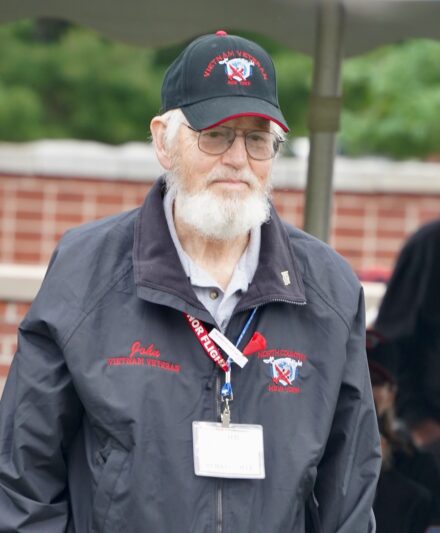 John Bingham, US Navy, 1961-1969, Vietnam
John felt a duty to serve, following the example of two uncles—one an admiral and the other a physician who served in Korea.
Originally hoping to become a submariner, he was unable to pass the pressure test required for submarine training. Instead, he attended Officer Candidate School in Newport, Rhode Island, later spending a year in graduate studies focused on defense intelligence and Arabic in preparation for a diplomatic assignment.
For two years, John served aboard an ocean-going minesweeper, a non-magnetic warship designed to locate and destroy naval mines in deep waters. He described it as “a wooden ship with iron men,” where every piece of iron had to be carefully tracked.
His final assignment in 1968 involved intelligence operations in the Mediterranean, monitoring Soviet naval activity. He also carried the disappointment of being unable to reach the USS Pueblo before its capture. Awarded the Naval Commendation Medal, John reflects that warfare is awful and demands immense sacrifice.
Asked if he would serve again, his answer is simple: “Yes—but I’d do it better.”
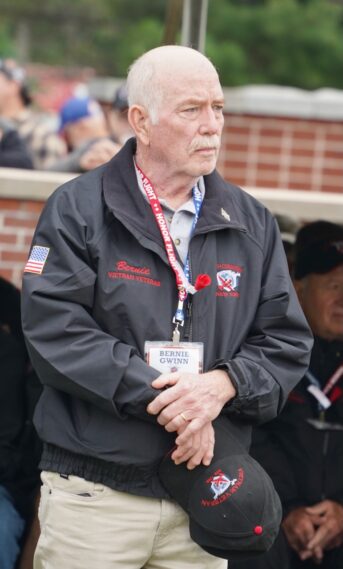 Bernard Gwinn, US Navy, 1971-1977, Vietnam
Bernie’s father was in the US Navy, one uncle was in the US Marines and two uncles were in the US Army. In April of 1971, Bernie was in the early enlistment program. For the first two year of his marriage, he was gone 15 out of 24 months.
Bernie was a hull technician (ship fitter) and damage control man, being responsible for the watertight integrity of the ship. In 1972, Bernie was assigned to the USS Edward McDonnell and was one of five hull technicians on the ship. He was on the ship for 3 years and was only sick once as he knew what not to eat!
Bernie wanted to retire from the military so after two years of inactive service with the Navy, he joined the Army. In Fort Drumm, Watertown, he was a heavy vehicle operator, drove a deuce and a half and got supplies and rations for the field.
One of Bernie’s best memories was when he crossed the artic ocean and got his “blue nose”. During that US Navy artic cruise, he got to go on a Dutch ship and eat their food and drink their beer.
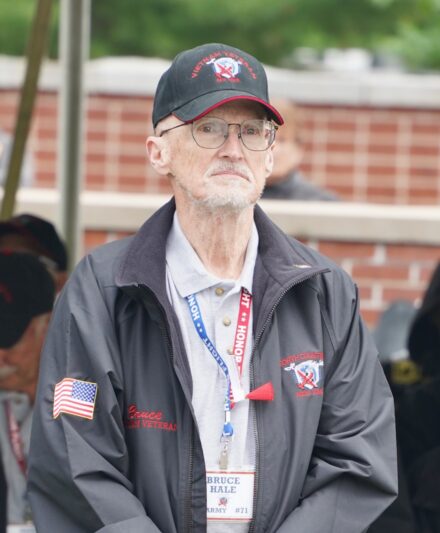 Bruce Hale, US Army, 1966-1968, Vietnam
Bruce’s military service began with ROTC at RPI, followed by basic training at Fort Benning, Georgia. After a two-year deferment for graduate school, his first assignment was at the Pentagon, where he briefed the USA Staff Communications team each morning on secure communication channels cleared for military messaging.
He was then deployed to Saigon and Vung Tau, commanding a Signal unit roughly the size of a platoon that transmitted radio-frequency messages worldwide. Soon afterward, he was tasked with establishing a similar unit in Can Tho. Given neither personnel nor equipment, he rebuilt the unit from scratch, relying heavily on a resourceful First Sergeant and WWII veteran.
During the first Tet Offensive, Viet Cong forces repeatedly attacked his position. While leading his men on the front line, Bruce was wounded in the neck by shrapnel. Surgeons later removed the fragment, and he was awarded the Purple Heart.
Discharged shortly afterward, Bruce reflects simply: “I was a soldier, and that was my job.”
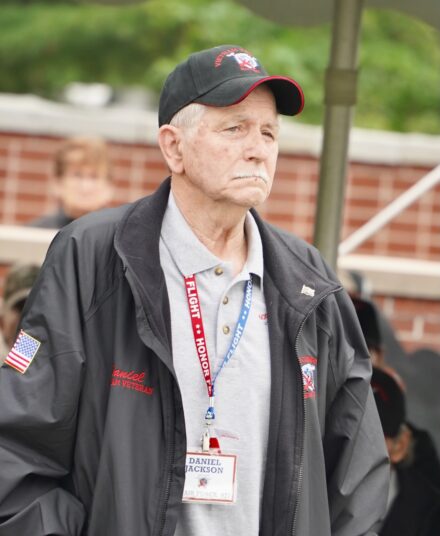 Daniel Jackson, US Air Force, 1968-1971, Vietnam
Daniel was 17 when he signed up and left home at 18. One half brother was in the US Marines and the other was in the US Navy.
Daniel was a power production specialist, otherwise known as a civil engineer for the first year and a half. They offered to let him stay at Travis Air Force Base, but he didn’t want to, so he went to Takhli Royal Thai AFB in Southeast Asia as part of the Tet offensive and witnessed the replacement of the FB 111 bombers to the B 52’s. This was supposed to be top secret but ended up being in the local newspaper and had a parade and float showcasing it!
Daniel found out he had no orders to come back from Thailand and had to stay 20 days until they were received. It was a long 20 days of waiting.
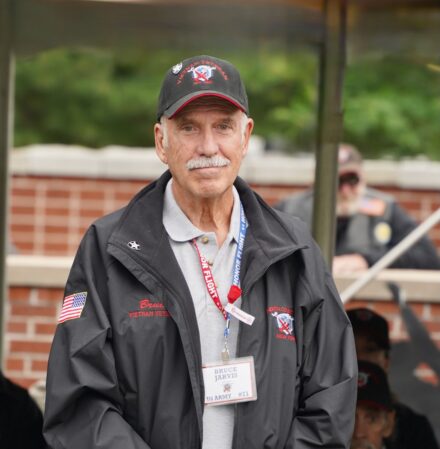 Bruce Jarvis, US Army, 1971-1973, Vietnam
Bruce received his draft notice while attending Clinton Community College. With lottery number 2, he knew his call to service was coming. During basic training, the “kid from Keeseville” earned a squad leader position, overseeing 15 soldiers.
After training as a Chaparral Crewman on an early air defense missile system, Bruce was assigned to the 2nd Infantry Division in South Korea. His typing skills led to a reassignment as a clerk, where he spent his 14-month tour supporting Army operations. He later worked in the General’s office, assisting with pre-Inspector General audits.
Bruce traveled throughout Korea, enjoyed Seoul and the countryside, and participated in field exercises near the DMZ, where North Korean propaganda was often discovered after nighttime drops.
One memorable event occurred on Easter Sunday 1972, when he underwent an emergency appendectomy at a MASH unit in Korea with his doctor looking exactly like Dr. Winchester from the TV series. Returning home, Bruce completed his service with the U.S. Army Reserve Medical Unit in Plattsburgh, no longer “just a kid from Keeseville,” but a proud soldier.
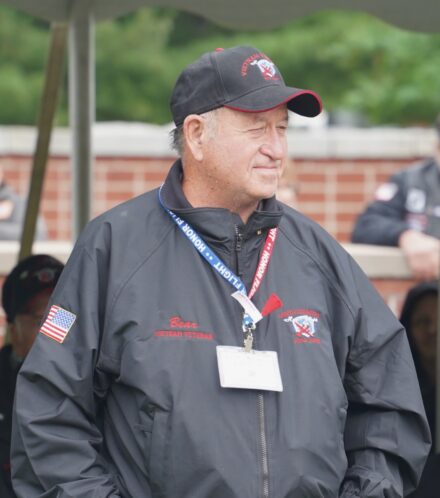 Kenneth LaFave, US Navy, 1960-1964, Vietnam
Ken graduated high school at 16 and wanted to become a state trooper. Since he was too young, he enlisted in the U.S. Navy with a friend from Churubusco, New York. They went their separate ways after joining and didn’t see each other again until both had completed their service.
Ken first attended Signalman School, where sailors communicated with flashing light signals. He could send the signals but struggled to read them, so he failed the test. He returned to the fleet and became a Gunner’s Mate.
Assigned to the USS Hammerberg, Ken was part of the ship’s “kiddie cruise” group because of his age. The ship made three trips to South America each year. When his discharge date arrived, he was still five days from port, so the Navy paid him for those extra days.
Ken said he had the best of both worlds: he served his country and played basketball nearly everywhere the ship traveled. At a reunion five years ago, he reconnected with a former teammate from the ship’s basketball team.
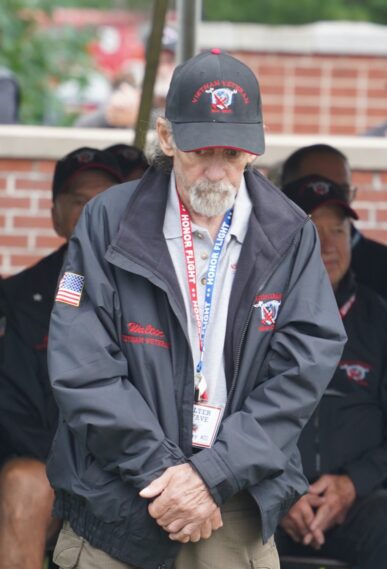 Walter Lafave, US Army, 1975-1978, Vietnam
Walter entered the Delayed Entry Program and became the first member of his family to serve in the military. Arriving at boot camp at Fort Dix, he was greeted by a four-foot corporal shouting at him and immediately wondered if enlisting had been the wildest thing he’d ever done.
He spent about six months at Fort Bragg working in the motor pool as a parts clerk before qualifying for parachute training. Determined to earn his wings, he attended jump school, a demanding 21-day course held Sunday to Sunday. Of the 400 soldiers who started, only 75 completed it.
While stationed at Fort Bragg, Walter watched massive airborne demonstrations involving 800 parachutists and 23 crisscrossing aircraft. During one jump, a friend missed the drop zone and landed in a tree. Walter eventually found him, and they rejoined the group. Walter called the Army a tremendous learning experience and said he would gladly do it again.
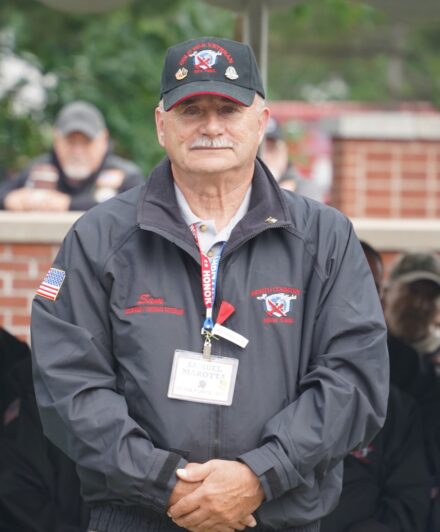 Samuel Marotta, US Air Force, 1974-1994, Cold War/Vietnam
Without his parents knowing, Sam went to the US Navy recruiter but they didn’t have the job he wanted so he went to the US Air Force recruiter and they guaranteed his job as a firefighter.
In 1975 he got married and was sent to Hawaii for three years, kind of a three year honeymoon. There were many bad fire calls and a major fuel spill.
After Hawaii he was sent to Texas where there was an explosion in the fire station, losing two firefighters. 15 months later he was sent to a remote assignment in Alaska. Sam was on the rescue crew where their was an aircraft crash with 24 people on board. They lost 6 that day.
Sam was sent back to Plattsburgh, off to California and then Alaska again. He eventually came back to Plattsburgh Air Force Base and retired there. He had numerous TDY’s, including one to Greece, which was his favorite. He enjoyed the travel and the friendships he made while in the Air Force. Sam is accompanied today by his best friend, Kevin Leblanc, also a US Air Force veteran.
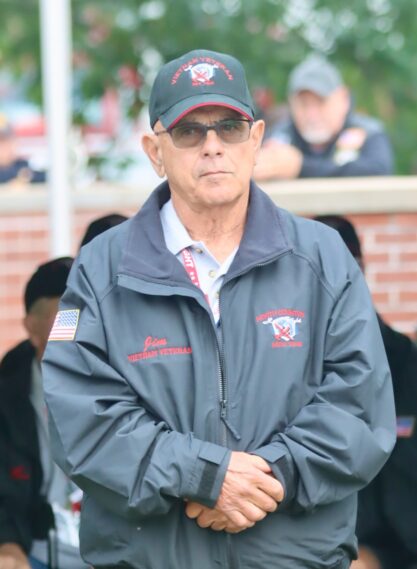 James Mazzotte, US Navy, 1964-1967, Vietnam
Jim attended electronics school during basic training at Great Lakes before serving three years on active duty in the U.S. Navy, three years in the Navy Reserve, and ten years in the Army Reserve.
Assigned to USS Richard E. Byrd—“Bird Dog”—he helped screen carriers including USS America, Saratoga, and Independence during North Atlantic and Mediterranean patrols.
In June 1967, Soviet submarines and torpedo boats shadowed the fleet as Bird Dog maneuvered to protect the carriers.
Then came word that USS Liberty had been attacked. Believed at first to be a Soviet strike, the attack left 34 dead and 171 wounded. Bird Dog reached Liberty the next day. Sailors and corpsmen treated the injured, recovered the fallen, and helped escort the damaged ship to Malta.
A month later, Jim’s enlistment ended. He left the only way he could: lifted by helicopter into the sky, then flown off the carrier the next morning. Just like that, his war was over.
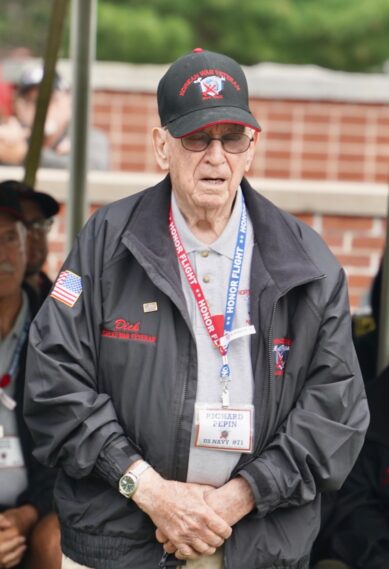 Richard Pepin, US Navy, 1952-1956, Korea
Richard wanted to join the Navy at 16 but they made him wait until he turned 17 in 1952.
Richard’s adventures started on the destroyer USS Conway, traveling to Guantanamo Bay, Cuba, St. Thomas and Puerto Rico. Later they would travel to Greenland, Iceland then through the Straight of Gibraltar into the Mediterranean. The USS Conway brought him to Sicily, Sardinia, Pisa, Naples and his favorite, Cannes France where he saw Marilyn Monroe.
After hitting an iceberg in Greenland on their way home, they headed to the dry dock at the Brooklyn Naval Yard. Richard ended up in New Bedford, MA where he would acquire a fake ID, since he was only 20.
Richard laughs about getting caught, he lost 2 stripes, was busted from Seaman 3rd class to seaman and was also thrown in the brig! Richard says he would do it all over again; he wants his 2 stripes back!
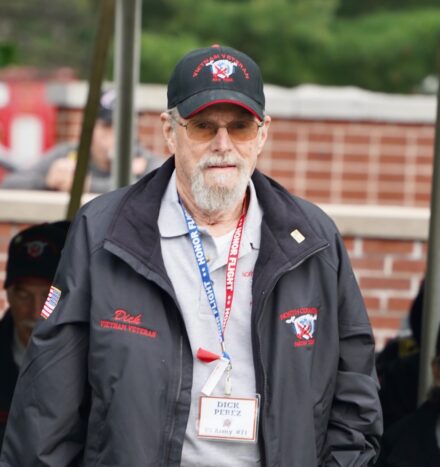 Richard Perez, US Army Airborne, 1963-1965, Vietnam
Dick’s cousin told him that by enlisting, he could serve two years instead of four. Three months before his 19th birthday, he entered military processing. Trained in light infantry, Dick learned to operate 82mm mortars, M-14 rifles, and jeep-mounted 106mm recoilless rifles.
After completing jump school, he received his assignment. Vietnam was not an option at the time, so he was sent to the Panama Canal Zone, a region known for its rugged mountains, dense jungle, and diverse population. Stationed primarily at Fort Kobbe beside Howard Air Force Base, he completed numerous parachute jumps and field exercises.
Dick vividly recalls night guard duty, listening to screeching rhesus monkeys and spotting anteaters nearby. Training often involved five-day treks from the Pacific to the Atlantic, with soldiers hiking deep into the jungle and constructing small bamboo shelters.
Looking back, Dick considers his two years of service a rewarding adventure. He remains especially grateful for the GI Bill, which helped him attend college, and for discovering a lifelong passion for skydiving.
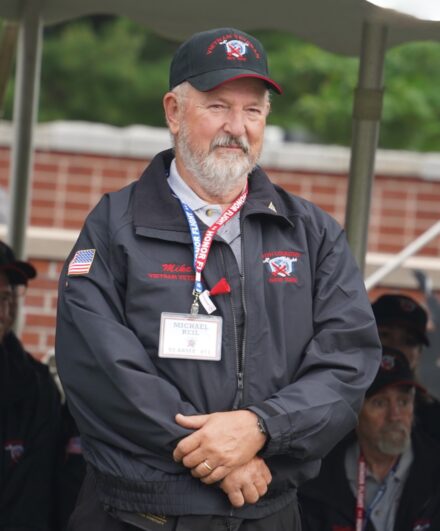 Michael Reil, US Army, 1968-1973, Vietnam
Michael’s father served in the Army during the Korean War, inspiring Michael to enlist shortly after high school, following a friend who had joined before him.
When he arrived at Fort Dix for basic training, he remembers seeing a sign and thinking, “What the hell did you just do?” He attended Military Police school and was stationed in Germany guarding a missile battery. During his service, he re-enlisted and attended computer repair school at Fort Monmouth, New Jersey, where he also got married.
Michael spent his final two years in Germany at a communication switching station, relaying messages between countries while holding Top Secret clearance.
After his discharge, he was told, “Don’t wear your uniform home.” Michael values the friendships, structure, and life lessons he gained through military service—perhaps one reason he and his wife have now been married for 55 years.
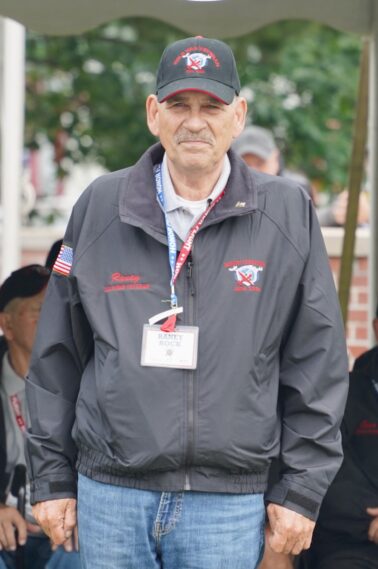 Raney Rock, US Army, 1976-1979, Cold War
Raney comes from a family of veterans; all his brothers served in different branches, and his uncle was a US Marine frogman.
His first assignment was at Fort Ord, attached to 7th Infantry Division Military Police, where he patrolled grounds. His first call was a crib death, a memory that stayed with him.
In 1978 he joined Operation Brave Shield with the Marines at 29 Palms, taking part in black fire exercises and witnessing roadrunners running over 26 mph as his sergeant attempted to shoot them.
At Fort Lee, watching aircraft and fishing for flounder, he was stung by a jellyfish, requiring IV treatment after the “urine remedy” briefly helped.
Between 1977–78 he lived with his Vietnam-veteran brother Bob, who is here today as Raney’s guardian. Bob didn’t recall it due to severe trauma. Raney loved the service and isn’t sure why he left.
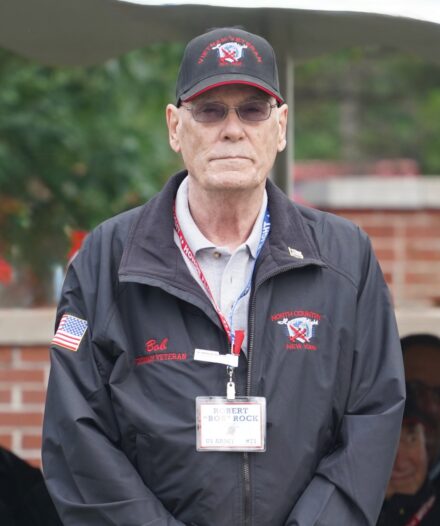 Robert Rock, US Army, 1971-1979, Vietnam
Bob graduated from Beekmantown Central School in June 1971 and entered the U.S. Army the following month. After completing training, he was deployed to Vietnam in November 1971 at age 19, serving as an infantryman (“grunt”) with General Custer’s famed 1st Battalion, 7th Cavalry Air Mobile Division. While serving in Vietnam, he earned numerous honors, including the Bronze Star, Army Commendation Medal for Valor, Air Medal, and Combat Infantry Badge.
Throughout his military career, Bob served in Finance, Military Police, and Public Affairs assignments. He completed eight years of active duty, traveling extensively throughout the Pacific region and Europe. He later joined the Army Reserve and retired with 22 years of service.
Bob lived in Hawaii for 38 years, where he met his wife. The military paid for two college degrees, helped purchase homes, and most important, he would not be sitting here today if it wasn’t for his military service.
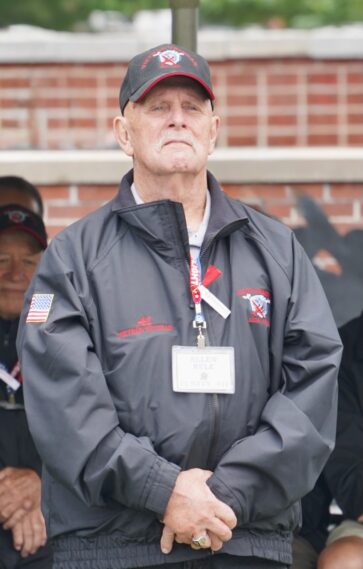 Allen Rule, US Navy, 1968-1970, Vietnam
Three of Allen’s brothers joined the Marines, but Allen “had to be different”, enlisting in the Navy through the Buddy Program. He quickly learned that once you signed up, “you belonged to them.”
Al spent his entire two-year enlistment in Key West. His captain, a laid-back redhead with a matching beard, allowed sailors to grow their hair to shoulder length—IF they first grew facial hair. At one point, the captain joked that he wasn’t getting out unless he went AWOL.
Al worked with explosives and weapons aboard a 46-foot sounding boat and occasionally enjoyed fishing trips with his buddies. Their orders were simple: any food and booze had to be gone before Monday. He later revealed that only the admiral and captain knew they were also making booze runs for other officers.
Al enjoyed the Navy. He made lifelong friends and brought home a discarded piece of mortar from Vietnam as a war souvenir.
Posted: June 21st, 2026 under Community Events, General News, Honor Flights, National News, Northern NY News, Peru/Regional History, Statewide News, Upstate New York, Veterans' News.